Verbos irregulares en ingles: lista completa y trucos para memorizar
Lista de los verbos irregulares mas importantes en ingles con pronunciacion, agrupados por patron y trucos para memorizarlos rapido.
Los verbos irregulares: el dolor de cabeza que tiene solucion
"Goed, thinked, buyed..." Si alguna vez dijiste algo asi, no sos el unico. Los verbos irregulares en ingles son una de las primeras grandes frustraciones de cualquier hispanohablante.
La buena noticia: no hay que memorizar 200 verbos al azar. Hay patrones. Y los verbos irregulares mas importantes son mucho menos de lo que parece.
Esta guia te da los 80 verbos irregulares mas usados, agrupados por patron, con ejemplos reales y estrategias para recordarlos.
Por que existen los verbos irregulares
En ingles, los verbos regulares forman el pasado agregando -ed: work → worked, play → played. Simple.
Los verbos irregulares son los que no siguen esta regla: go → went, buy → bought, write → wrote. Su forma es unica y hay que aprenderla.
Necesitas conocer tres formas de cada verbo:
- Infinitivo (forma base)
- Pasado simple (para el pasado simple)
- Participio pasado (para perfect tenses y voz pasiva)
Patron 1: Las tres formas son iguales
Estos son los mas faciles de recordar porque no cambian:
| Infinitivo | Pasado simple | Participio pasado |
|---|---|---|
| cut | cut | cut |
| hit | hit | hit |
| hurt | hurt | hurt |
| let | let | let |
| put | put | put |
| set | set | set |
| shut | shut | shut |
| cost | cost | cost |
| read | read | read |
| spread | spread | spread |
Ojo con read: se pronuncia "rid" en pasado, aunque se escribe igual.
Patron 2: Pasado y participio son iguales (pero distintos del infinitivo)
Este grupo es muy grande y muy util:
| Infinitivo | Pasado/Participio | Ejemplo |
|---|---|---|
| bring | brought | She brought the report. |
| buy | bought | We bought new equipment. |
| catch | caught | I caught a mistake. |
| teach | taught | He taught me a lot. |
| think | thought | I thought it was Friday. |
| feel | felt | I felt confident. |
| keep | kept | She kept her promise. |
| leave | left | He left the company. |
| meet | met | We met the client. |
| send | sent | I sent the email. |
| spend | spent | They spent the budget. |
| build | built | We built a new feature. |
| find | found | I found the file. |
| have | had | We had a meeting. |
| hear | heard | I heard the news. |
| hold | held | She held the position. |
| make | made | They made a deal. |
| say | said | He said yes. |
| sell | sold | We sold 500 units. |
| tell | told | She told the truth. |
| pay | paid | The client paid. |
| win | won | Our team won. |
| lose | lost | Don't lose the file. |
| sit | sat | I sat in the front row. |
| stand | stood | He stood out. |
| understand | understood | I understood the brief. |
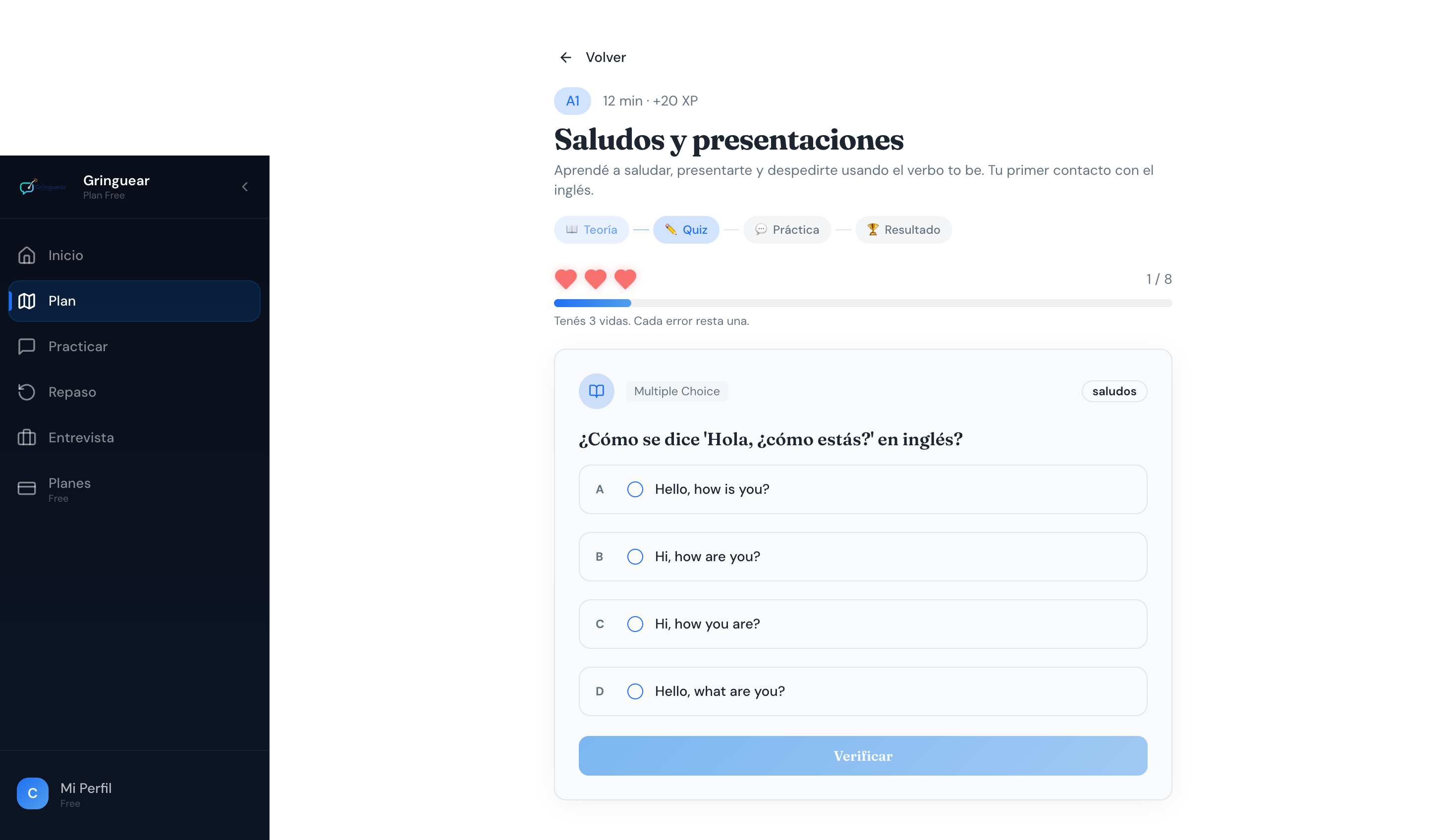
Practica gramatica en contexto
Ejercicios interactivos que te muestran la gramatica en situaciones reales de trabajo, no en frases artificiales.
Ver las leccionesPatron 3: Las tres formas son distintas
Este grupo requiere mas atencion:
| Infinitivo | Pasado simple | Participio pasado |
|---|---|---|
| be | was/were | been |
| begin | began | begun |
| break | broke | broken |
| choose | chose | chosen |
| do | did | done |
| drink | drank | drunk |
| drive | drove | driven |
| eat | ate | eaten |
| fall | fell | fallen |
| fly | flew | flown |
| forget | forgot | forgotten |
| get | got | gotten/got |
| give | gave | given |
| go | went | gone |
| grow | grew | grown |
| hide | hid | hidden |
| know | knew | known |
| ride | rode | ridden |
| ring | rang | rung |
| rise | rose | risen |
| run | ran | run |
| see | saw | seen |
| show | showed | shown |
| sing | sang | sung |
| speak | spoke | spoken |
| steal | stole | stolen |
| swim | swam | swum |
| take | took | taken |
| throw | threw | thrown |
| wake | woke | woken |
| wear | wore | worn |
| write | wrote | written |
Trucos para memorizar verbos irregulares
Truco 1: Aprendelos en grupos por sonido
bring-brought, buy-bought, catch-caught, teach-taught, think-thought - todos terminan en "ought/aught". Si aprendes uno, te acordas del patron.
Truco 2: Usalos en oraciones reales tuyas
No memorices "go-went-gone" en abstracto. Pensa: "I went to a job interview last week." Lo que tiene contexto personal se recuerda mejor.
Truco 3: Practica con flashcards en contexto
En lugar de "go / went", escribi "go to work / I went to work yesterday." El contexto ayuda a la memoria.
Truco 4: Los 20 mas frecuentes primero
Concentrarte en los verbos irregulares que mas vas a usar: be, have, do, go, say, get, make, know, think, come, take, see, want, give, use, find, tell, ask, seem, feel.
Ejercicios practicos
Completa con la forma correcta del verbo entre parentesis (pasado simple):
- She _______ (give) an excellent presentation yesterday.
- We _______ (spend) three hours in the meeting.
- I _______ (find) the solution last night.
- The client _______ (tell) us to change the design.
- They _______ (build) the app in six months.
Respuestas:
- gave
- spent
- found
- told
- built
En el contexto laboral
Los verbos irregulares aparecen constantemente en el trabajo. Estos son los que mas vas a necesitar:
Para hablar de logros pasados (clave en entrevistas):
"I led a team of 10 people." "We built a product from scratch." "I spoke at two industry conferences." "Our team grew revenue by 40%."
Para reportar lo que paso:
"The meeting ran longer than expected." "We found a critical bug in production." "The client chose a different vendor."
Para emails:
"I sent you the files yesterday." "We received your proposal and thought it was excellent." "The team met and decided to move forward."
Siguiente paso
Los verbos irregulares son fundamentales para dominar el pasado simple en ingles y el presente perfecto. Tambien los necesitas para la voz pasiva.
¿Queres practicar estos verbos en conversaciones reales? Hace el diagnostico gratuito y empeza a entrenar con contextos laborales desde tu nivel actual.
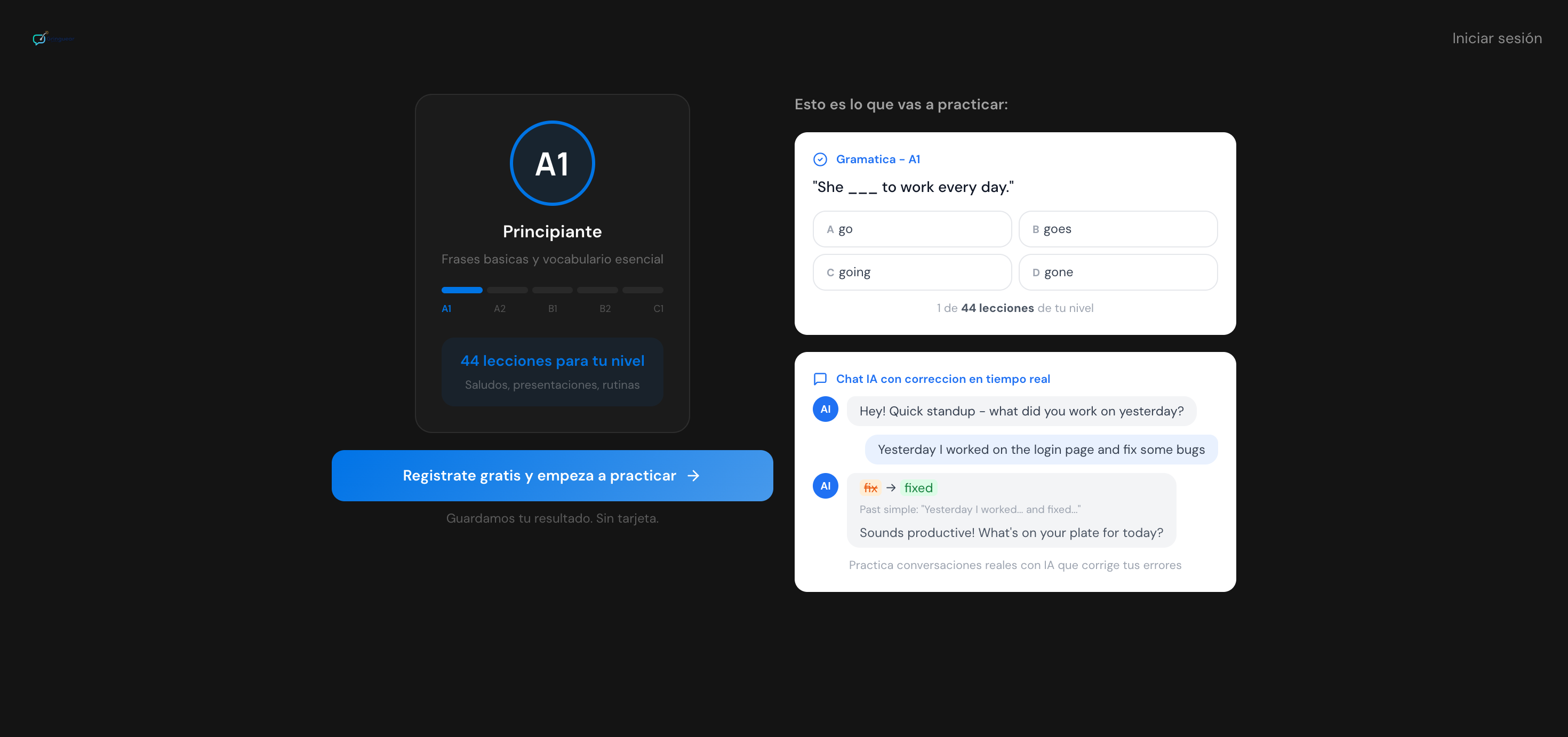
Descubrí tu nivel de inglés en 30 segundos
Diagnostico gratuito con resultado CEFR inmediato. Despues, practica con lecciones y chat con IA adaptados a tu nivel.
Hacer el diagnostico gratis