Reported speech en ingles: como reportar lo que alguien dijo
Guia completa de reported speech en ingles con reglas de cambio de tiempos, ejemplos y ejercicios practicos para hispanohablantes.
Reported speech: cuando tenes que contar lo que alguien dijo
Estas en una reunion y tu colega te pregunta: "What did the client say?" O en un email tenes que escribir: "The manager confirmed that..." Para eso existe el reported speech.
El reported speech (o estilo indirecto) es la forma de contar lo que alguien dijo sin citar sus palabras exactas. En ingles tiene reglas especificas que son distintas al espanol, y conocerlas te va a ahorrar muchas confusiones.
Diferencia entre direct speech y reported speech
Direct speech (discurso directo): citas las palabras exactas, entre comillas. He said: "I will send the report tomorrow."
Reported speech (discurso indirecto): relatas lo que dijo, sin comillas. He said (that) he would send the report the next day.
¿Notaste los cambios? Hay tres tipos de transformaciones: el tiempo verbal retrocede, los pronombres cambian y las expresiones de tiempo se ajustan.
Regla de backshift: los tiempos verbales retroceden
Cuando el verbo principal esta en pasado (said, told, explained, mentioned), el tiempo del discurso reportado "retrocede" un tiempo verbal:
| Discurso directo | Reported speech |
|---|---|
| Presente simple (works) | Pasado simple (worked) |
| Present continuous (is working) | Past continuous (was working) |
| Pasado simple (worked) | Past perfect (had worked) |
| Present perfect (has worked) | Past perfect (had worked) |
| will | would |
| can | could |
| may | might |
| must | had to |
Ejemplos:
Directo: "I work in finance." Reportado: She said (that) she worked in finance.
Directo: "We are launching a new product." Reportado: They said they were launching a new product.
Directo: "I will call you tomorrow." Reportado: He said he would call me the next day.
Cambios en pronombres y expresiones de tiempo
Pronombres: cambian segun el contexto de quien habla y de quien reporta.
"I love my job." → She said she loved her job.
Expresiones de tiempo:
| Directo | Reportado |
|---|---|
| now | then / at that moment |
| today | that day |
| yesterday | the day before / the previous day |
| tomorrow | the next day / the following day |
| this week | that week |
| here | there |
Reported questions: preguntas en estilo indirecto
Cuando reportas una pregunta, el orden de la oracion cambia: ya no hay inversion del sujeto y no se usa auxiliar al principio.
Yes/No questions - usas if o whether:
Directo: "Do you have experience with Python?" Reportado: She asked if I had experience with Python.
Wh- questions - usas la misma palabra interrogativa:
Directo: "Where do you see yourself in five years?" Reportado: He asked me where I saw myself in five years.
Directo: "What time does the meeting start?" Reportado: She asked what time the meeting started.
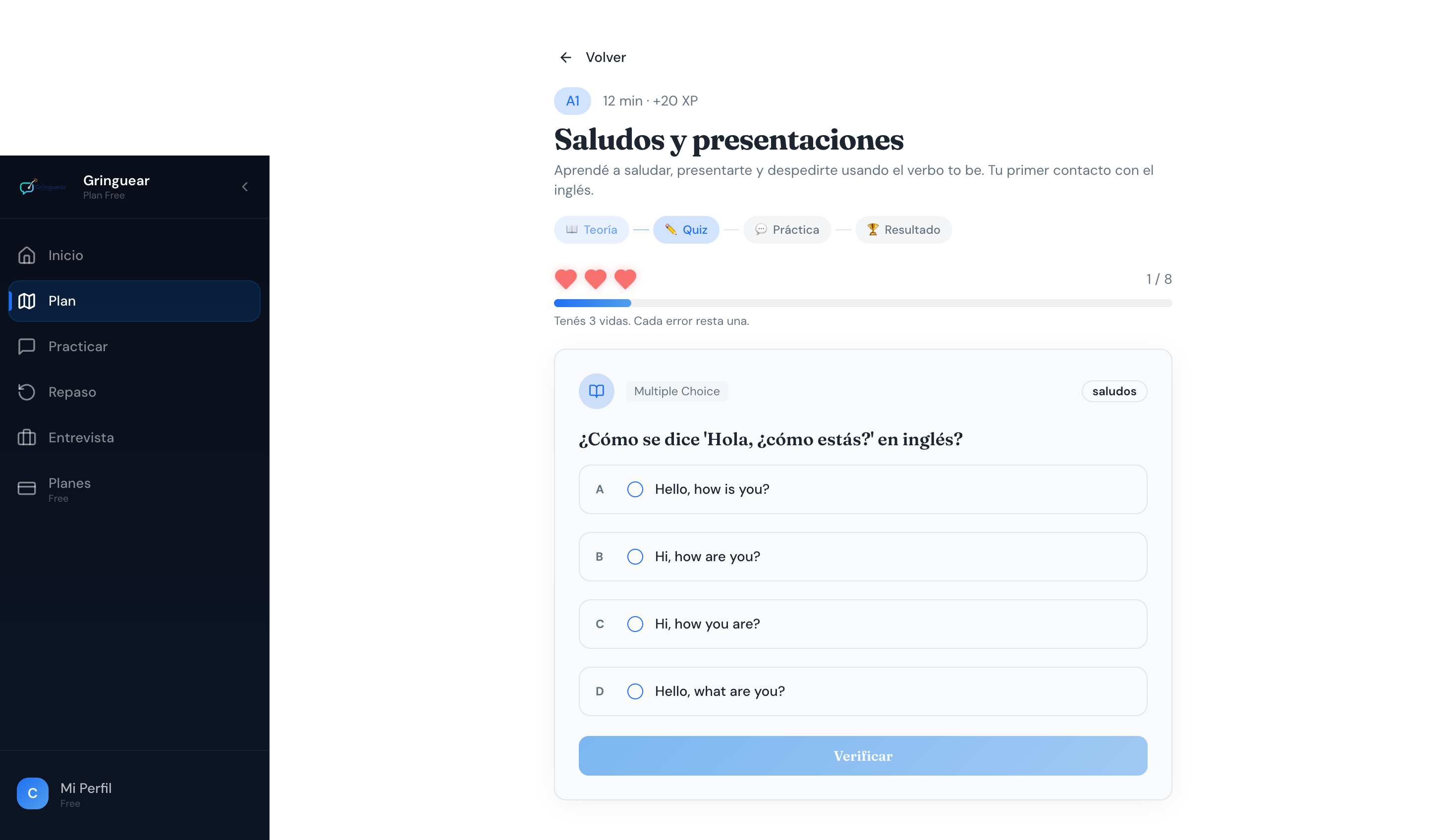
Practica gramatica en contexto
Ejercicios interactivos que te muestran la gramatica en situaciones reales de trabajo, no en frases artificiales.
Ver las leccionesReported commands e instrucciones
Para ordenes, pedidos e instrucciones, usas told/asked + objeto + to + infinitivo:
Directo: "Send me the file." Reportado: She told me to send her the file.
Directo: "Please don't share this information." Reportado: He asked us not to share that information.
Errores comunes de hispanohablantes
Error 1: No aplicar el backshift
Incorrecto: He said he will send the report. Correcto: He said he would send the report.
Error 2: Mantener la inversion en preguntas reportadas
Incorrecto: She asked where was I from. Correcto: She asked where I was from.
Error 3: Olvidar cambiar "here/now" por "there/then"
Incorrecto: He said the meeting was here. Correcto: He said the meeting was there.
Error 4: Usar "say" cuando corresponde "tell"
Say no necesita objeto: He said he was tired. Tell necesita objeto (a quien se le dice): He told me he was tired.
Ejercicios practicos
Pasa al reported speech:
- "I finished the project yesterday." (She said...)
- "Are you attending the conference?" (He asked me...)
- "We can deliver it by Friday." (They said...)
- "Don't forget to send the invoice." (She told me...)
- "Where did you study?" (He asked me...)
Respuestas:
- She said she had finished the project the day before.
- He asked me if I was attending the conference.
- They said they could deliver it by Friday.
- She told me not to forget to send the invoice.
- He asked me where I had studied.
En el contexto laboral
El reported speech es esencial para comunicar en el trabajo, especialmente cuando relay informacion entre equipos o reportas conversaciones.
En reuniones:
"The client said they needed the report by Thursday." "The CEO mentioned that the company was expanding into new markets." "Our legal team told us not to sign the contract yet."
En emails:
"As discussed in our last meeting, you mentioned that the budget had been approved." "John confirmed that the deadline had been moved to next week."
En entrevistas:
"My previous manager told me I had strong leadership skills." "The interviewer asked where I saw myself in five years."
Poder reportar conversaciones con precision es una habilidad muy valorada en ambientes profesionales angloparlantes.
Practica estas estructuras
El reported speech aparece en niveles B1 y B2 de Gringuear. Podes practicar simulaciones de reuniones y entrevistas donde necesitas reportar lo que dijeron otros.
¿No sabes en que nivel estas? Hace el diagnostico gratuito y te armamos un plan adaptado a tu nivel actual.
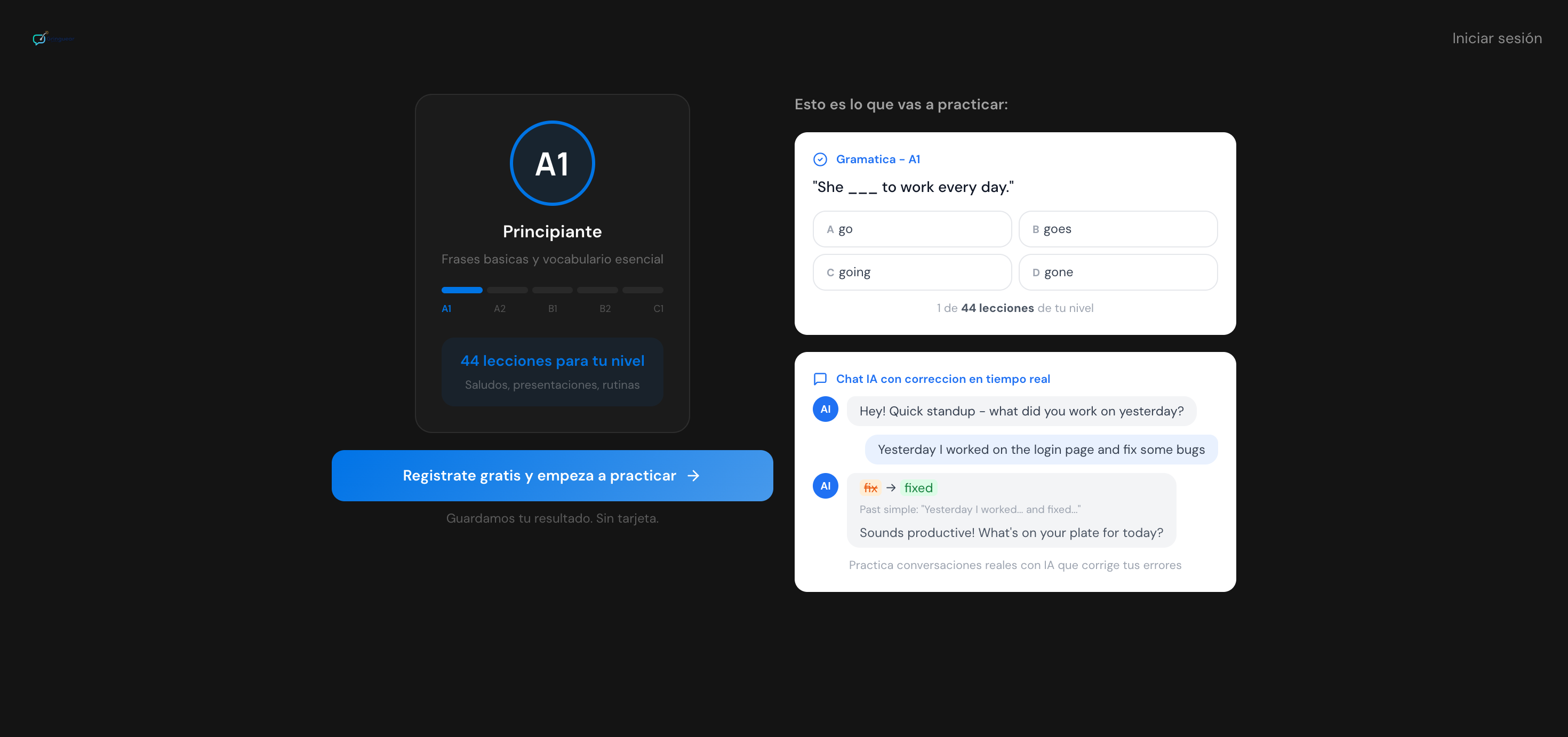
Descubrí tu nivel de inglés en 30 segundos
Diagnostico gratuito con resultado CEFR inmediato. Despues, practica con lecciones y chat con IA adaptados a tu nivel.
Hacer el diagnostico gratisVerbos en ingles: guia completa con los mas usados
12 min de lectura