Tiempos verbales en ingles: tabla resumen con ejemplos
Todos los tiempos verbales en ingles explicados con tabla resumen, ejemplos practicos y tips para saber cual usar en cada situacion.
Los tiempos verbales en ingles: el mapa completo
Cuando empezas a estudiar ingles en serio, la pregunta inevitable aparece: "cuantos tiempos verbales tiene el ingles?" La respuesta corta: muchos. La respuesta util: los que realmente necesitas en el dia a dia son manejables y tienen una logica clara.
Esta guia es tu tabla de referencia completa: estructura, uso y ejemplos de todos los tiempos verbales en ingles, organizados para que puedas consultarla cuando lo necesites.
Los tiempos del presente
Present Simple
Estructura: sujeto + verbo (+ s en 3a persona singular) Uso: habitos, hechos, verdades generales, programas fijos
I work from home three days a week. She manages the sales team. The store opens at 9 AM.
Para la guia completa, leer presente simple en ingles.
Present Continuous
Estructura: sujeto + am/is/are + verbo-ing Uso: acciones en progreso ahora, situaciones temporales, planes futuros confirmados
I am finishing the report right now. They are hiring new developers this month. We are meeting the client tomorrow.
Para la guia completa, leer present continuous en ingles.
Present Perfect
Estructura: sujeto + have/has + participio pasado Uso: experiencias sin tiempo especifico, acciones recientes con relevancia presente, acciones que empezaron en el pasado y continuan
I have worked in three different countries. She has just sent the email. We have been partners for five years.
Present Perfect Continuous
Estructura: sujeto + have/has been + verbo-ing Uso: acciones que empezaron en el pasado y continuan hasta ahora (enfasis en la duracion o continuidad)
I have been working on this project since January. She has been managing the account for three years.
Los tiempos del pasado
Past Simple
Estructura: sujeto + verbo pasado (regular -ed o irregular) Uso: acciones completadas en un momento especifico del pasado
I graduated in 2019. We launched the product last quarter. She didn't attend the meeting.
Para la guia completa, leer pasado simple en ingles.
Past Continuous
Estructura: sujeto + was/were + verbo-ing Uso: accion en progreso en un momento del pasado, contexto de una accion interrumpida
I was preparing the presentation when the server crashed. They were negotiating the contract all morning.
Past Perfect
Estructura: sujeto + had + participio pasado Uso: accion completada antes de otra accion pasada (el "pluscuamperfecto" del espanol)
By the time the client arrived, we had finished the demo. She had already sent the report before the meeting started.
Past Perfect Continuous
Estructura: sujeto + had been + verbo-ing Uso: accion en progreso antes de otra accion pasada
I had been working on the project for six months before it was cancelled.
Los tiempos del futuro
Future with Will
Estructura: sujeto + will + infinitivo Uso: predicciones, decisiones espontaneas, promesas
I think AI will change the industry. I'll send you the files tonight. (decision espontanea) We will deliver on time. (promesa)
Future with Going To
Estructura: sujeto + am/is/are going to + infinitivo Uso: planes e intenciones ya decididos, predicciones con evidencia presente
I am going to apply for that position. (plan) Look at those clouds - it's going to rain. (evidencia)
Future Continuous
Estructura: sujeto + will be + verbo-ing Uso: accion en progreso en un momento futuro
I will be presenting to the board at this time tomorrow. This time next week, we will be living in Madrid.
Future Perfect
Estructura: sujeto + will have + participio pasado Uso: accion que se completara antes de un momento futuro
By December, I will have worked here for five years. We will have launched the app by the end of the quarter.
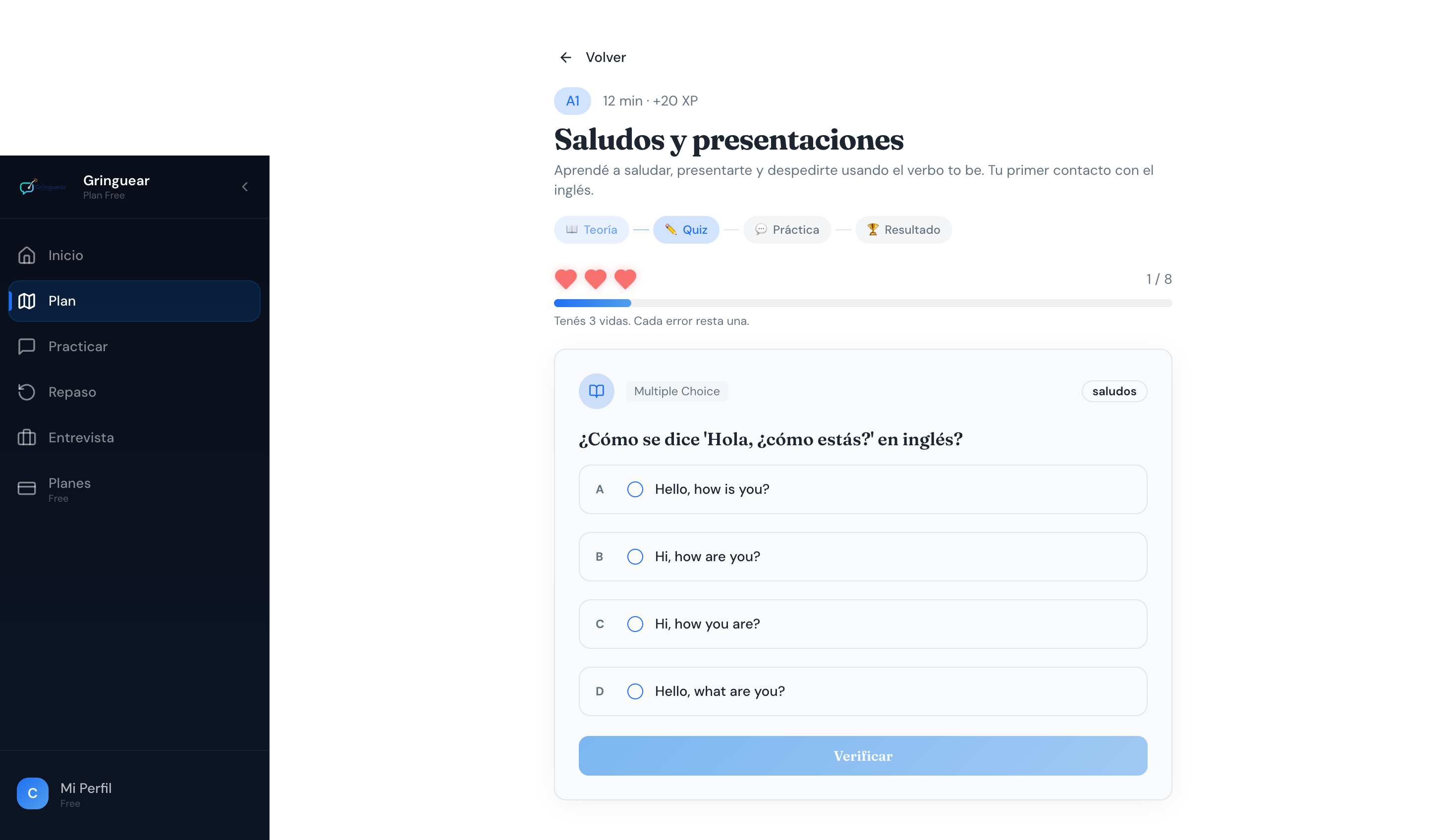
Practica gramatica en contexto
Ejercicios interactivos que te muestran la gramatica en situaciones reales de trabajo, no en frases artificiales.
Ver las leccionesTabla resumen de todos los tiempos verbales
| Tiempo | Estructura | Ejemplo |
|---|---|---|
| Present Simple | work/works | I work in tech. |
| Present Continuous | am/is/are working | I am working now. |
| Present Perfect | have/has worked | I have worked here for 2 years. |
| Present Perfect Cont. | have/has been working | I have been working since 9 AM. |
| Past Simple | worked / went | I worked there for a year. |
| Past Continuous | was/were working | I was working when you called. |
| Past Perfect | had worked | I had finished before she arrived. |
| Past Perfect Cont. | had been working | I had been working for hours. |
| Future (will) | will work | I will send it tomorrow. |
| Future (going to) | am/is/are going to work | I am going to apply. |
| Future Continuous | will be working | I will be presenting tomorrow. |
| Future Perfect | will have worked | I will have finished by Friday. |
Como elegir el tiempo correcto
Estas preguntas te ayudan a decidir:
Presente o pasado o futuro?
- Pasa ahora / siempre: presente
- Ya paso (momento especifico): pasado
- Va a pasar: futuro
Dentro del presente, ?simple o continuous?
- Habito/permanente: present simple
- Ahora mismo/temporal: present continuous
- Experiencia/relevancia presente: present perfect
Dentro del pasado, ?simple o perfect?
- Tiempo especifico mencionado: past simple
- Antes de otro evento pasado: past perfect
- Experiencia sin tiempo especifico: present perfect (no past!)
Errores comunes de hispanohablantes
Error 1: Usar present perfect cuando va past simple
Incorrecto: I have visited London in 2019. Correcto: I visited London in 2019. (hay tiempo especifico)
Error 2: Traducir el preterito imperfecto espanol al past continuous
"Trabajaba mucho" puede ser past simple (I worked a lot) o past continuous (I was working a lot) dependiendo del contexto.
Error 3: Usar "will" para planes ya decididos
Menos natural: I will meet with the team tomorrow. (suena a decision espontanea) Mas natural: I am meeting with the team tomorrow. (plan confirmado)
En el contexto laboral
Cada situacion laboral tiene su tiempo verbal apropiado:
Email de seguimiento: present perfect "I have attached the document you requested. I have also updated the spreadsheet."
Describir experiencia en entrevista: past simple "I managed a team of ten people. We launched three products."
Hablar de lo que estas haciendo: present continuous "I am currently working on a data migration project."
Hacer predicciones: will / going to "I think this strategy will work. We are going to see results within 60 days."
Reportar avance: present perfect "We have completed the first phase. We have been working on this for six weeks."
Empeza a practicar
Los tiempos verbales se aprenden con practica real, no solo con teoria. En Gringuear, cada leccion trabaja los tiempos verbales en contextos laborales reales.
¿En que nivel estas? Hace el diagnostico gratuito y recibe un plan personalizado para mejorar tu ingles de forma sistematica.
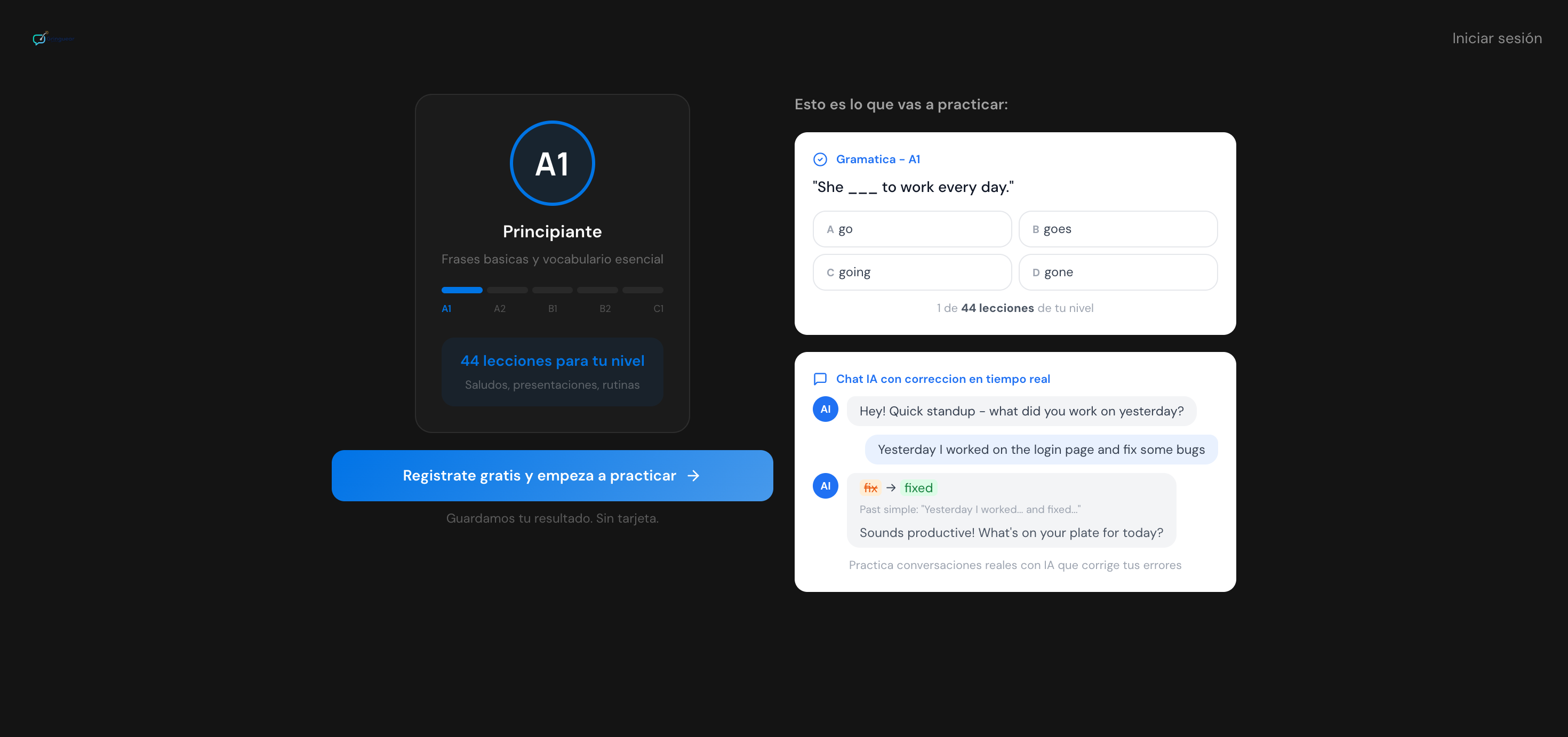
Descubrí tu nivel de inglés en 30 segundos
Diagnostico gratuito con resultado CEFR inmediato. Despues, practica con lecciones y chat con IA adaptados a tu nivel.
Hacer el diagnostico gratisRelative clauses en ingles: que son y como usarlas
9 min de lectura