Present continuous en ingles: cuando y como usarlo
Guia completa del present continuous en ingles: reglas, ejemplos, errores comunes y ejercicios. Aprende a diferenciar del presente simple.
Present continuous: el tiempo del "ahora mismo"
Imaginate que estas en una videollamada y tu jefe te pregunta "What are you working on?" Si no sabes usar el present continuous, no podes responder bien esa pregunta tan basica.
El present continuous (o present progressive) describe acciones que estan pasando en este momento o en un periodo temporal. Es uno de los tiempos mas usados en conversaciones en ingles, y es fundamental diferenciarlo del presente simple.
Cuando se usa el present continuous
1. Acciones que ocurren ahora mismo
I am writing an email right now. (Estoy escribiendo un email ahora mismo.) She is talking to a client. (Ella esta hablando con un cliente.)
2. Acciones temporales (aunque no sean exactamente "ahora")
I am working on a new project this week. (Estoy trabajando en un proyecto nuevo esta semana.) We are testing a new system this month. (Estamos probando un sistema nuevo este mes.)
3. Cambios y tendencias
The market is growing fast. (El mercado esta creciendo rapido.) More companies are adopting remote work. (Mas empresas estan adoptando el trabajo remoto.)
4. Planes futuros ya confirmados
I am meeting with the team tomorrow. (Me reuno con el equipo manana.) She is starting her new job next Monday. (Ella empieza su nuevo trabajo el lunes que viene.)
Estructura del present continuous
La formula es: sujeto + verbo to be (am/is/are) + verbo-ing
Afirmativo
| Sujeto | To be | Verbo-ing | Ejemplo |
|---|---|---|---|
| I | am | working | I am working. |
| He/She/It | is | working | She is working. |
| You/We/They | are | working | They are working. |
Negativo
Agrega not despues del verbo to be:
I am not working today. He is not (isn't) answering emails. They are not (aren't) attending the meeting.
Preguntas
Invirti el sujeto y el verbo to be:
Are you working from home? Is she handling the project? What are they discussing?
Reglas para agregar -ing
La mayoria de verbos simplemente agrega -ing: work → working, read → reading.
Pero hay excepciones importantes:
- Verbo termina en -e: elimina la e y agrega -ing (make → making, write → writing)
- Verbo de una silaba con consonante-vocal-consonante: duplica la consonante final (run → running, sit → sitting)
- Verbo termina en -ie: cambia ie por y (die → dying, lie → lying)
Present continuous vs presente simple
Esta es la confusion mas comun. La clave es preguntarte: "es una accion permanente/habitual o temporal/en progreso?"
| Presente Simple | Present Continuous |
|---|---|
| I work at Google. (permanente) | I am working on a new feature. (ahora) |
| She lives in Buenos Aires. (permanente) | She is living in Madrid for 6 months. (temporal) |
| He checks emails every morning. (habitual) | He is checking emails right now. (en este momento) |
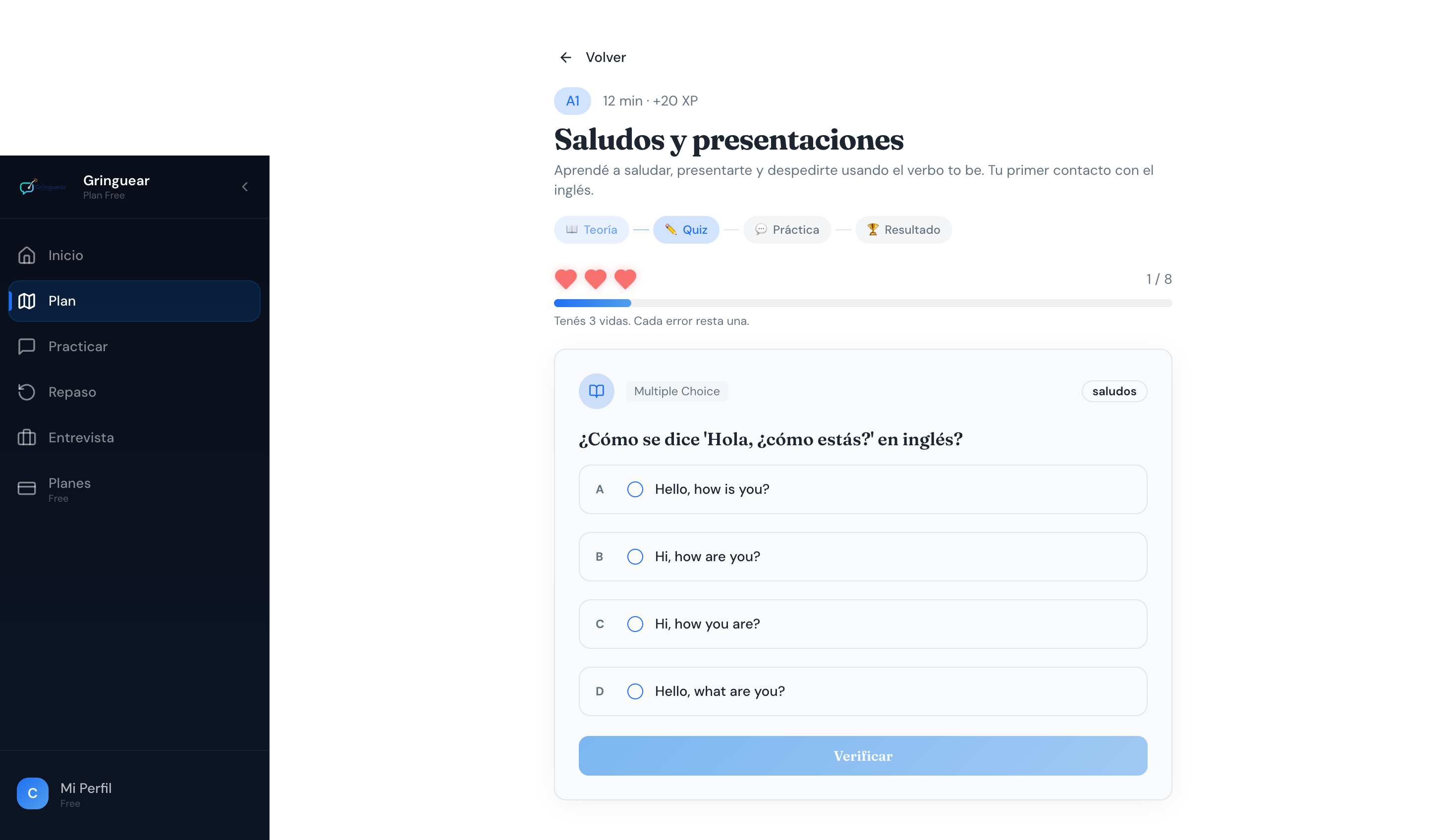
Practica gramatica en contexto
Ejercicios interactivos que te muestran la gramatica en situaciones reales de trabajo, no en frases artificiales.
Ver las leccionesVerbos que NO usan present continuous
Hay un grupo de verbos llamados "stative verbs" que generalmente no se usan en forma continua. Son verbos que expresan estados, no acciones:
Emociones y estados mentales: know, believe, understand, think (= creer), want, need, prefer, love, hate, like
Percepciones: see, hear, smell, taste, feel
Posesion: have (= tener/poseer), own, belong
Incorrecto: I am knowing the answer. Correcto: I know the answer.
Incorrecto: She is having a car. Correcto: She has a car.
Ojo: algunos de estos verbos tienen usos especiales en continuo. "I am having lunch" es correcto porque "have" aqui significa "comer/tomar", no "poseer".
Errores comunes de hispanohablantes
Error 1: Olvidar el verbo to be
Incorrecto: I working on it. Correcto: I am working on it.
Error 2: Usar stative verbs en continuo
Incorrecto: I am understanding now. Correcto: I understand now.
Error 3: Traducir el espanol literalmente
En espanol decis "Estoy de acuerdo." En ingles no es "I am agreeing" sino "I agree".
Error 4: Confundir -ing de gerundio con present continuous
Swimming is good for your health. (gerundio, sujeto de la oracion) I am swimming. (present continuous, accion en progreso)
Ejercicios practicos
Completa las oraciones con el present continuous del verbo entre parentesis:
- Look! She _______ (present) the quarterly results.
- We _______ (launch) a new product next month.
- The team _______ (not / respond) to messages right now.
- _______ you _______ (work) from home this week?
- More companies _______ (invest) in AI tools.
Respuestas:
- is presenting
- are launching
- is not responding / isn't responding
- Are you working
- are investing
En el contexto laboral
En reuniones:
"We are currently reviewing the budget." "The developers are fixing a bug in production." "Our sales are growing faster than expected this quarter."
En emails:
"I am writing to follow up on our meeting last week." "We are currently processing your request."
En entrevistas:
"What are you working on currently?" "I am leading a digital transformation project." "We are exploring new markets in Latin America."
Esta ultima pregunta es clasica en entrevistas en ingles. Practicalas en Gringuear Practice con feedback de IA.
Proximo paso
Ahora que dominas el present continuous, el proximo nivel es aprender a combinarlo con el presente simple y los tiempos verbales del pasado.
¿Queres saber en que nivel estas? Hace el diagnostico gratuito y empeza a practicar desde tu nivel real.
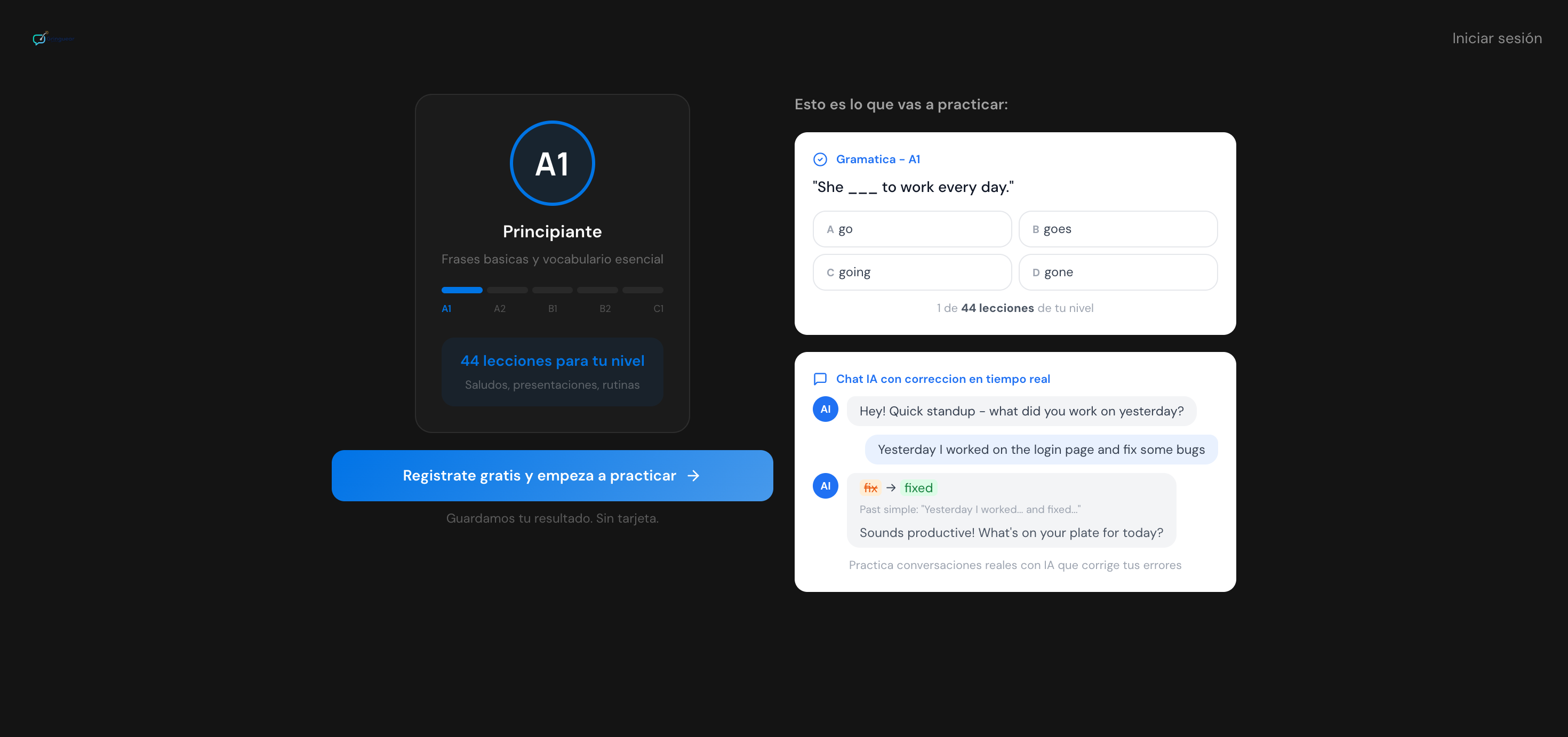
Descubrí tu nivel de inglés en 30 segundos
Diagnostico gratuito con resultado CEFR inmediato. Despues, practica con lecciones y chat con IA adaptados a tu nivel.
Hacer el diagnostico gratisPassive voice: voz pasiva en ingles paso a paso
10 min de lectura