Phrasal verbs laborales: 40 que vas a usar todas las semanas
Follow up, bring up, figure out, wrap up: los 40 phrasal verbs que aparecen en cada reunion y email de trabajo. Con significado y ejemplo laboral.
Hay una razon por la que los phrasal verbs son el tema que mas frustra a los hispanohablantes que aprenden ingles: son impredecibles.
"Give up" no significa "dar arriba". "Run out" no significa "salir corriendo". "Look into" no significa "mirar adentro". El significado de cada phrasal verb es independiente de sus partes, y eso va en contra de como funciona el espanol, donde si conoces las palabras componentes, podes deducir el significado.
Pero hay una buena noticia: en el ingles laboral, hay un conjunto relativamente limitado de phrasal verbs que aparecen una y otra vez. Si dominas estos 40, vas a sonar natural en el 80% de las situaciones de trabajo.
Por que los phrasal verbs son tan dificiles para hispanohablantes
En espanol, el equivalente de muchos phrasal verbs es un verbo simple con prefijo: postpone es como posponer, investigate es como investigar. El ingles tiene esas palabras tambien - y son las que aprenden los estudiantes primero porque vienen del Latin via Frances.
El problema es que los hablantes nativos de ingles en contextos informales y medianamente formales - incluyendo la mayoria de los ambitos laborales - prefieren los phrasal verbs. En una reunion, alguien va a decir "let's follow up on this" y no "let's pursue this further". Van a decir "we ran into a problem" y no "we encountered a difficulty".
Si solo manejas el vocabulario latinizado, vas a entender la mayoria de los emails formales pero vas a perderte en las reuniones y en los Slack channels.
El otro problema es la ambiguedad: el mismo phrasal verb puede significar cosas distintas segun el contexto. "Take off" puede ser "despegar" (avion), "sacarse algo" (ropa) o "despegar" (proyecto que empieza a tener exito). Eso requiere exponerse a ejemplos en contexto, no solo memorizar definiciones.
Phrasal verbs para reuniones
Estas son las que mas vas a escuchar y usar en calls, standups y presentaciones.
1. Kick off
Significado: empezar formalmente un proyecto o reunion. "Let's kick off the meeting with a quick status update." "We're kicking off the new project next Monday." Error comun: decir "begin off" o "start off the project" - suena raro. "Kick off" es el termino natural para inicio de proyectos.
2. Wrap up
Significado: terminar o concluir algo. "Let's wrap up the meeting - we're over time." "Can you wrap up that feature by Friday?" Error comun: decir "finish up the meeting" no esta mal, pero "wrap up" es mucho mas natural para cierres de reunion.
3. Bring up
Significado: mencionar o introducir un tema en una conversacion. "I wanted to bring up a concern about the timeline." "Who brought up the idea of using a different API?" Error comun: confundirlo con "bring out". "Bring out" significa sacar algo o resaltar una cualidad.
4. Follow up (on)
Significado: hacer seguimiento de algo que quedo pendiente. "I'll follow up on that action item by tomorrow." "Can you follow up with the client about the contract?" Nota: el sustantivo "follow-up" se usa mucho: "Let's schedule a follow-up call".
5. Take note of
Significado: prestar atencion y recordar algo. "Take note of the new process - it changes how we log bugs." "I've taken note of your concerns."
6. Go over
Significado: revisar o repasar algo. "Let's go over the agenda before we start." "Can you go over the pull request one more time?" Error comun: decir "review over" - "review" solo ya es suficiente, pero "go over" es mas coloquial y natural en reuniones.
7. Run through
Significado: repasar algo rapidamente de principio a fin. "Let me run through the main points before we go into detail." "Can we run through the demo one more time before the client call?"
8. Touch base
Significado: ponerse en contacto brevemente para sincronizarse. "Let's touch base early next week to see how things are going." "I'll touch base with the design team about the specs."
9. Circle back (to)
Significado: volver a un tema mas tarde. "Let's circle back to that after we finish the main agenda." "I'll circle back on this once I have more information."
10. Weigh in (on)
Significado: dar tu opinion sobre algo. "I'd like you to weigh in on this decision before we finalize." "Can the legal team weigh in on the privacy implications?"
Phrasal verbs para emails y comunicacion escrita
11. Get back to
Significado: responder a alguien mas tarde. "I'll get back to you with the numbers by end of day." "Can you get back to me when you have a moment?" Error comun: decir "I will response you" - eso no existe en ingles. La forma correcta es "I will respond" o "I'll get back to you".
12. Reach out (to)
Significado: contactar a alguien para pedir ayuda o informacion. "I reached out to the vendor but haven't heard back." "Feel free to reach out if you have questions."
13. Follow through (on)
Significado: cumplir con algo que prometiste o empezaste. "She always follows through on her commitments." "We need to follow through on the plan we presented."
14. Look into
Significado: investigar o explorar algo. "I'll look into that bug and get back to you." "Can you look into alternative vendors?"
15. Set up
Significado: organizar, configurar o establecer algo. "Can you set up a meeting with the client for next week?" "I need to set up my local environment first."
16. Fill in
Significado: informar a alguien sobre algo que se perdio; tambien completar un formulario. "Can you fill me in on what was decided while I was on leave?" "Fill in the ticket template before submitting the request."
17. Sign off (on)
Significado: aprobar formalmente algo. "We need the CTO to sign off on the architecture decision." "Once you sign off, we'll move to implementation."
18. Flag (something)
Significado: marcar algo para llamar la atencion sobre ello. "I wanted to flag a potential issue with the data." "Flag any blockers in the standup so we can address them quickly."
19. Loop in
Significado: incluir a alguien en una conversacion o hilo de comunicacion. "Loop in the legal team before we finalize the contract." "I've looped in our PM - she'll have more context."
20. Copy in / CC
Significado: incluir a alguien en copia de un email. "Copy in the manager so she's aware of the situation." "I've CC'd our head of operations on this thread."
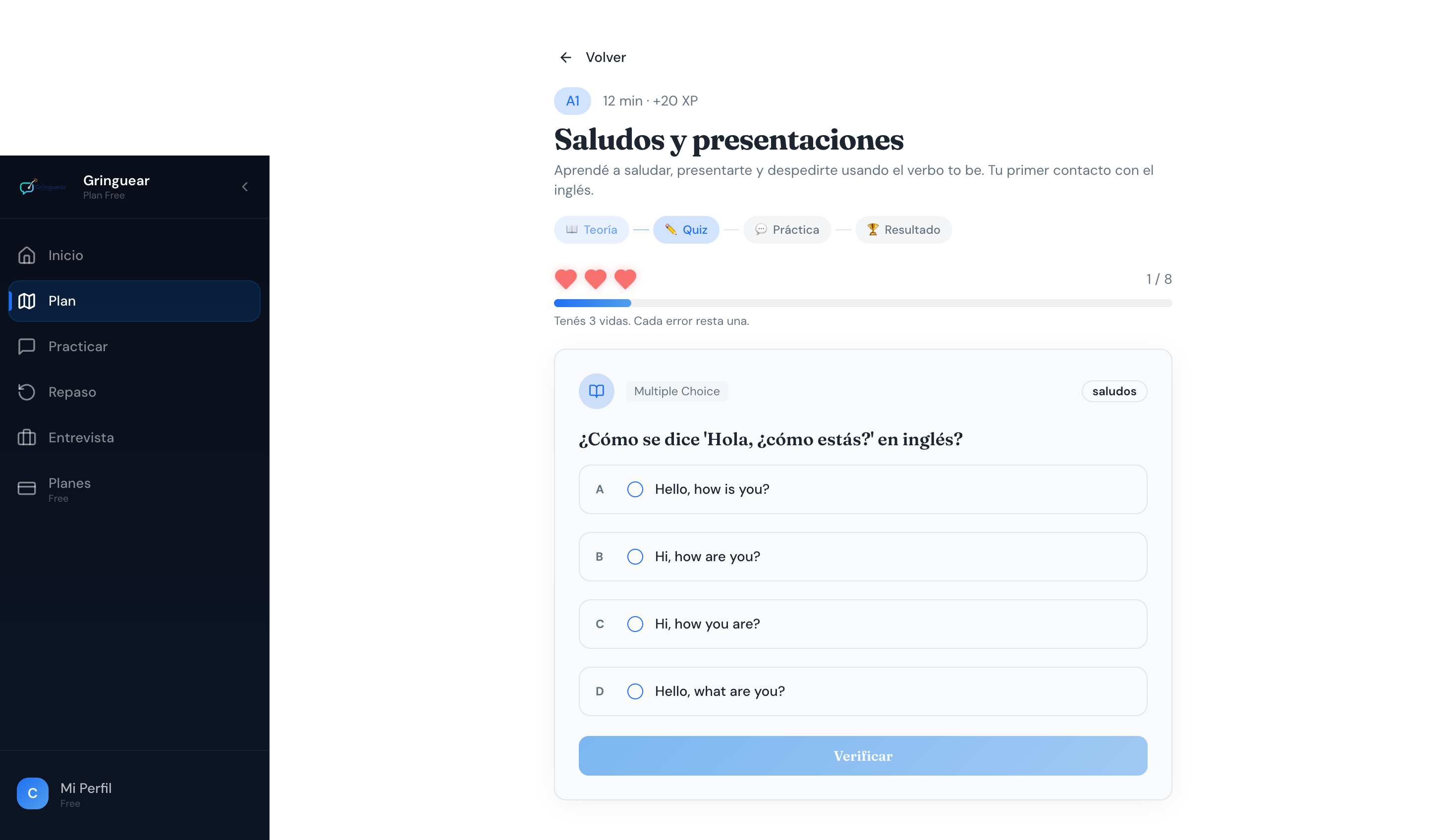
Aprende con lecciones interactivas
183 lecciones de A1 a B2 con ejercicios practicos, feedback inmediato y vocabulario laboral real.
Ver las leccionesPhrasal verbs para gestion de proyectos
21. Roll out
Significado: lanzar algo de manera gradual o a gran escala. "We're rolling out the new feature to all users next week." "The rollout went smoothly - no major issues."
22. Scale up
Significado: crecer o aumentar la capacidad. "We need to scale up the infrastructure before the campaign." "The team scaled up from 3 to 10 engineers in six months."
23. Phase out
Significado: eliminar algo gradualmente. "We're phasing out the old API over the next quarter." "The legacy system will be phased out by Q3."
24. Break down
Significado: dividir algo en partes mas pequeñas; tambien fallar. "Can you break down the timeline into weekly milestones?" "The pipeline broke down during the deployment."
25. Run into
Significado: encontrarse con un problema inesperadamente. "We ran into a blocking issue with the third-party integration." "Did you run into any problems during the migration?"
26. Sort out
Significado: resolver o organizar algo. "Let me sort out the access permissions and I'll let you know." "We need to sort out the discrepancy in the data before the report."
27. Iron out
Significado: resolver los detalles o problemas restantes de algo. "We need to iron out a few details before we can launch." "The contract is almost ready - just need to iron out the terms."
28. Put off
Significado: postergar algo. "We had to put off the launch due to a critical bug." "Don't put off the conversation about tech debt - it compounds."
29. Cut down (on)
Significado: reducir la cantidad de algo. "We need to cut down on meeting time - it's affecting productivity." "Can we cut down the scope to hit the deadline?"
30. Come up (with)
Significado: surgir inesperadamente; tambien generar ideas. "Something came up - can we reschedule?" "The team came up with three solid solutions."
Phrasal verbs para feedback y evaluacion
31. Point out
Significado: señalar algo, llamar la atencion sobre algo. "I wanted to point out that the test coverage is below our threshold." "She pointed out a flaw in the logic during the code review."
32. Build on
Significado: basarse en algo existente para ir mas lejos. "Let's build on what we learned in Q1 and push further this quarter." "This proposal builds on the original architecture."
33. Fall behind
Significado: atrasarse respecto a un objetivo o calendario. "We're falling behind on the roadmap - let's reassess priorities." "He's falling behind because he's blocked on the API access."
34. Catch up (on)
Significado: ponerse al dia con algo. "I need to catch up on the tickets from last week." "Let's have a quick call to catch up on where things stand."
35. Pick up (on)
Significado: notar o detectar algo; retomar algo. "Good catch - I didn't pick up on that edge case." "Can you pick up where we left off in the last session?"
Phrasal verbs para plazos y prioridades
36. Figure out
Significado: resolver un problema o entender algo. "We're still figuring out the best approach." "Did you figure out why the test was failing?"
37. Work out
Significado: resolverse bien; tambien calcular o planificar. "The migration worked out better than expected." "Can you work out the timeline and share it with the team?"
38. Tie up
Significado: completar los ultimos detalles de algo. "I just need to tie up a few loose ends before I can hand it over." "Let's tie up the documentation this week."
39. Take over
Significado: asumir el control o la responsabilidad de algo. "Can you take over this project while I'm on leave?" "She took over as tech lead after he resigned."
40. Step up
Significado: tomar mas responsabilidad, subir el nivel de esfuerzo. "With the deadline approaching, everyone needs to step up." "He stepped up when the team was short-staffed."
Como practicar phrasal verbs de manera efectiva
Memorizar listas no es suficiente. El problema con los phrasal verbs es que necesitas escucharlos y usarlos en contexto para que se graben. Algunas estrategias que funcionan:
Crea frases con tu trabajo real. No uses ejemplos de libros - inventa oraciones sobre lo que haces en tu trabajo. "I need to follow up on the PR I submitted yesterday." Eso se queda mucho mas que "She follows up on her tasks."
Escucha standups y reuniones en ingles. YouTube, podcasts de tech, videos de demos de producto. Cada vez que escuches un phrasal verb, pausa y procesalo: que significo en ese contexto.
Usa el error como ancla. La primera vez que uses mal un phrasal verb y alguien te corrija - o que notes que no te entendieron - ese es el momento en que mas facil se va a grabar la forma correcta.
Prioriza los de alta frecuencia. Los 40 de esta lista cubren la mayoria de los contextos laborales. No intentes aprender 200 phrasal verbs a la vez.
Si queres un entorno donde practicar estas expresiones en conversaciones reales - con feedback sobre si las usas correctamente - hace el diagnostico gratuito de Gringuear y accede al chat de IA que corrige tu ingles en contexto, con el nivel de exigencia adaptado a donde estas hoy.
Guia completa
Ingles para programadores
Guia completa de ingles para developers que trabajan en equipos internacionales.
Ver la guia completa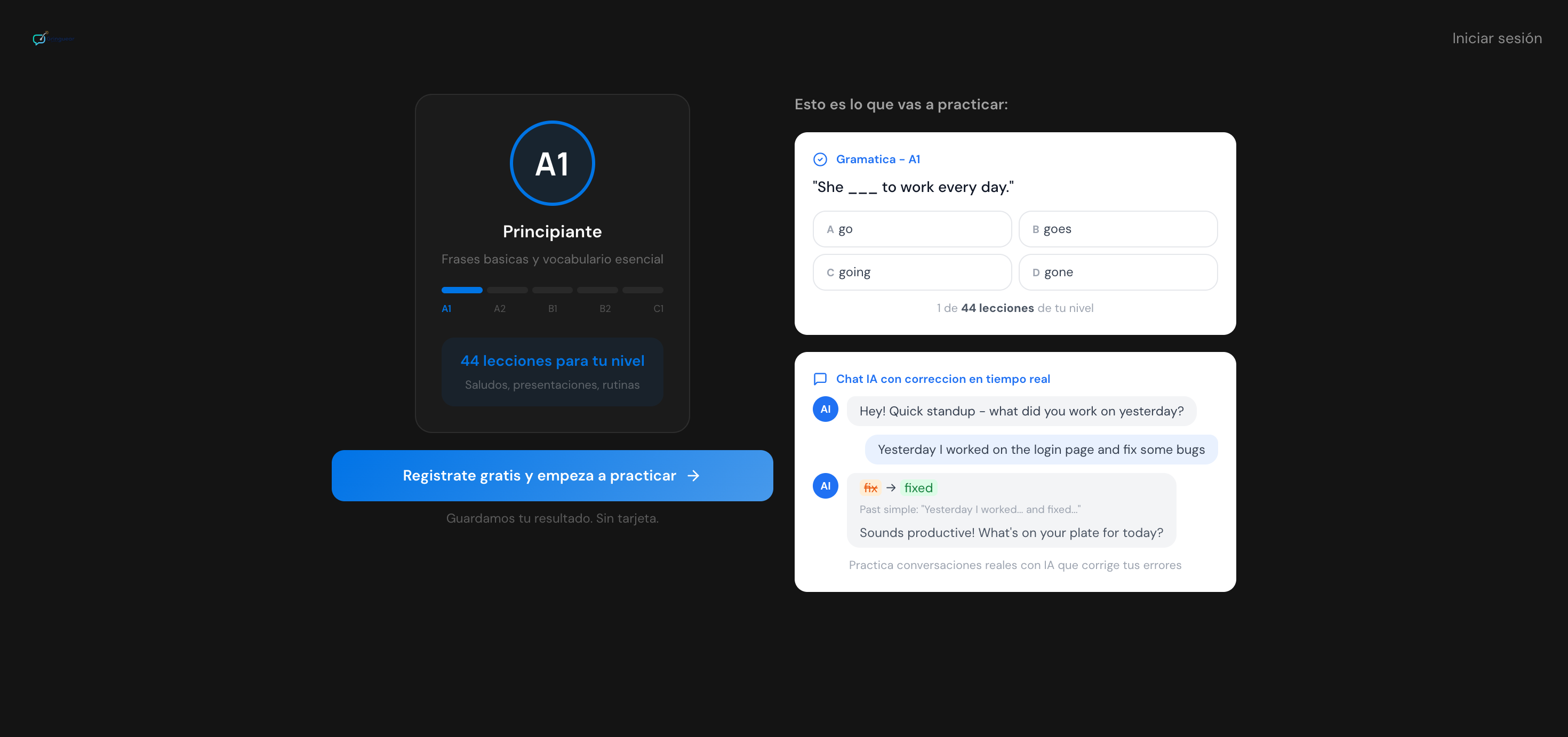
Descubrí tu nivel de inglés en 30 segundos
Diagnostico gratuito con resultado CEFR inmediato. Despues, practica con lecciones y chat con IA adaptados a tu nivel.
Hacer el diagnostico gratis