Como hablar de tus fortalezas y debilidades en ingles
What are your strengths and weaknesses? Frases reales, debilidades que SI podes mencionar, y como sonar honesto sin arruinar tu candidatura.
"What are your greatest strengths?" y "What is your biggest weakness?" son dos de las preguntas mas frecuentes en entrevistas de trabajo en ingles. Y tambien dos de las mas temidas.
No porque sean dificiles de responder en si mismas, sino porque hay una tension real: si sos demasiado modesto, pareces inseguro. Si exageras tus fortalezas, pareces arrogante. Y si das una debilidad real... corres el riesgo de eliminarte solo.
En este articulo te damos un framework practico, frases reales y una guia clara de que decir, como decirlo y que jamas mencionar.
Por que hacen esta pregunta
Antes de pensar en las respuestas, entende por que el entrevistador pregunta esto:
- Con las fortalezas quieren confirmar que tenes las habilidades necesarias para el puesto
- Con las debilidades evaluan tu autoconciencia (self-awareness) y tu capacidad de crecer
No buscan perfeccion. Buscan madurez profesional. Alguien que se conoce a si mismo y sabe trabajar en sus areas de mejora es mucho mas valioso que alguien que dice "I have no weaknesses".
8 fortalezas con frases reales
Para cada fortaleza, te damos una frase de apertura y una forma de darle evidencia concreta. Sin evidencia, las fortalezas suenan vacias.
1. Comunicacion clara
"One of my strengths is clear, direct communication. I've found that when I document decisions and explain the 'why' behind them, my team moves faster and with fewer blockers."
Aplica para: tech leads, PMs, cualquier rol con stakeholders.
2. Resolucion de problemas
"I tend to break complex problems into smaller pieces. In my last role, this helped us reduce our deployment errors by 40% after I introduced a pre-launch checklist."
Clave: siempre conecta con un resultado medible si podes.
3. Adaptabilidad
"I adapt quickly to changing priorities. When our company shifted to a remote-first model, I helped redesign our onboarding process from scratch in under two weeks."
Muy valorada en startups y empresas en crecimiento.
4. Atencion al detalle
"I'm detail-oriented, especially when it comes to quality. I usually do a final review of my work before delivery, which has helped me catch issues others miss."
Cuidado: no la uses si el rol requiere velocidad por sobre precision.
5. Trabajo en equipo
"I'm a strong team player. I believe good collaboration means being proactive - not just waiting to be asked, but also checking in on teammates when I notice they're stuck."
6. Liderazgo con influencia
"Even in non-leadership roles, I tend to take initiative. I've often been the person who steps up to facilitate retrospectives or propose process improvements."
7. Orientacion a resultados
"I'm very results-driven. I like setting clear goals at the beginning of a project and checking progress against them regularly. It keeps me and the team focused."
8. Aprendizaje continuo
"I'm a fast learner and genuinely enjoy picking up new skills. Last year I taught myself basic data analysis in Python to better understand our product metrics."
Esta es especialmente buena si estas cambiando de area o asumiendo nuevas responsabilidades.
La formula para presentar fortalezas
No digas solo "I'm good at communication." Eso dice cualquiera. La formula es:
[Nombre de la fortaleza] + [Como se manifiesta en tu trabajo] + [Evidencia o resultado]
Ejemplo con la formula aplicada:
"I'm particularly strong at prioritization. In my previous role as a product manager, I introduced a simple scoring framework for our backlog that the whole team adopted. It cut our planning meetings by half and we shipped 30% more features that quarter."
6 debilidades que SI podes mencionar (con el spin correcto)
La clave con las debilidades no es mentir - es elegir algo real pero que no sea critico para el puesto y demostrando que sos consciente de ello y estas trabajando en mejorarlo.
1. Perfeccionismo (con matices)
La clasica, pero funciona si la presentas bien. No digas solo "I'm a perfectionist" - eso suena a cliche.
Bien: "I used to spend too long polishing work before sharing it for feedback. I've learned to ship earlier and iterate, but it's still something I consciously remind myself of."
2. Dificultad para delegar
"I used to struggle with delegating, especially on projects I felt ownership over. I've been working on this by being more explicit about what success looks like so I can hand off tasks with confidence."
Excelente para roles senior donde la delegacion es clave para el siguiente nivel.
3. Presentaciones en publico
"Public speaking used to make me very nervous. I've been actively working on it by volunteering to present in team meetings. I'm much more comfortable now, though it's still an area I want to keep improving."
Evitala si el rol implica mucha presentacion a clientes o ejecutivos.
4. Manejo del tiempo entre multiples proyectos
"When I'm juggling several projects, I sometimes underestimate how long context-switching takes. I've started blocking focused time in my calendar, which has helped a lot."
5. Pedir ayuda muy tarde
"Early in my career, I tended to try to figure everything out on my own before asking for help. I've learned that asking earlier actually speeds things up, and I now see it as a sign of efficiency, not weakness."
6. Exceso de detalle en documentacion
"I tend to over-document, which can slow me down. I've been learning to calibrate the level of detail to the audience - not every document needs to be exhaustive."
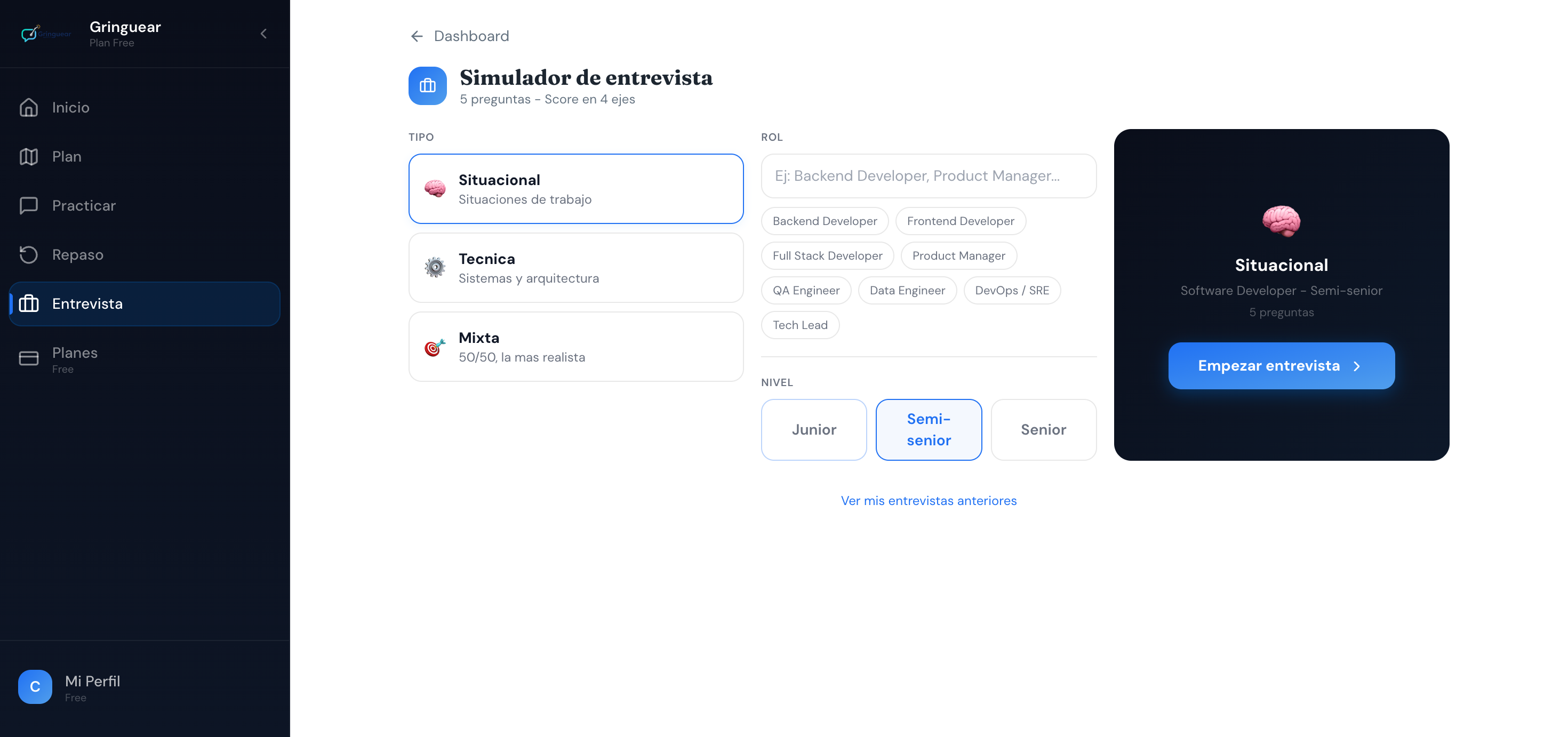
Practica entrevistas con IA
Simula entrevistas reales en ingles y recibe feedback inmediato sobre tu vocabulario, estructura y fluidez.
Probar el simuladorEl "improvement story" framework
Para cualquier debilidad que menciones, usá esta estructura de tres partes:
1. Nombrala con honestidad: "One area I've been working on is..."
2. Contextualizala: "In the past, this showed up as..."
3. Mostra el progreso: "What I've been doing to improve is... and I've already seen..."
Ejemplo completo:
"One area I've been working on is giving feedback more directly. In the past, I sometimes softened criticism too much, which made it less actionable. I've been practicing a framework called SBI - Situation, Behavior, Impact - to make my feedback clearer, and my team has told me the 1-on-1s feel more useful now."
Esta estructura muestra que sos reflexivo, que actuaste, y que tenés resultados. Eso es exactamente lo que el entrevistador quiere escuchar.
Variaciones segun tu nivel de ingles
Si tu nivel es A2-B1, mantene las respuestas simples y concretas. No trates de sonar sofisticado con vocabulario que no dominás:
"I'm good at solving problems. For example, when our system had a bug, I found the issue and fixed it in two hours."
"I'm still improving my public speaking. I practice by joining team meetings and asking questions."
Si tu nivel es B2+, podes usar vocabulario mas matizado:
"I'd say my core strength is systems thinking - I tend to see patterns across complex processes and identify leverage points where small changes create outsized impact."
"Something I'm actively developing is executive presence in high-stakes meetings. I've been getting coaching on this and working with a mentor who's helped me be more concise and assertive."
Que jamas decir
Algunas respuestas que pueden costarte la entrevista:
En fortalezas:
- Evita generalidades vacias: "I'm a hard worker", "I'm a team player" sin ningun ejemplo
- No menciones rasgos de personalidad sin conectarlos al trabajo
- No exageres hasta el punto de sonar irreal: "I never make mistakes"
En debilidades:
- Jamas digas "I have no weaknesses" - es la respuesta que mas incomoda a los entrevistadores
- Evita debilidades que sean criticas para el puesto (si sos developer, no digas que odiás el codigo)
- No des debilidades que suenen a fortalezas disfrazadas sin argumentos: "I work too hard" es un cliche transparente
- No des una debilidad tan grave que levante banderas rojas: problemas de actitud, conflictos con autoridad, o incapacidad de trabajar en equipo
Una respuesta de muestra completa
Entrevistador: "Tell me about your greatest strength and one area you're working to improve."
Respuesta:
"My greatest strength is probably being able to translate technical complexity into clear, accessible language. I've spent a lot of time working with non-technical stakeholders, and I've found that when people understand the 'why' behind technical decisions, alignment happens much faster. In my last role, I started writing short weekly updates for the leadership team and it significantly reduced the number of ad-hoc sync requests we got.
An area I'm actively working on is managing my attention across parallel projects. I tend to go deep on things, which is great for quality but can create bottlenecks when I'm responsible for multiple workstreams. I've been using time-blocking and daily standups with myself to stay on top of context-switching, and it's been making a real difference."
Practica antes de la entrevista
El error mas comun no es no saber que decir - es no haberlo practicado en voz alta. Leer estas frases es muy diferente a decirlas en tiempo real.
Antes de tu proxima entrevista, dedica 20 minutos a hablar en voz alta tus respuestas. Si podes grabarlas y escucharlas, mejor.
¿No sabes cuanto ingles tenes ahora mismo para una entrevista? El diagnostico de Gringuear evalua tu nivel real en menos de 5 minutos y te dice donde enfocarte para avanzar rapido. Hace tu diagnostico gratis.
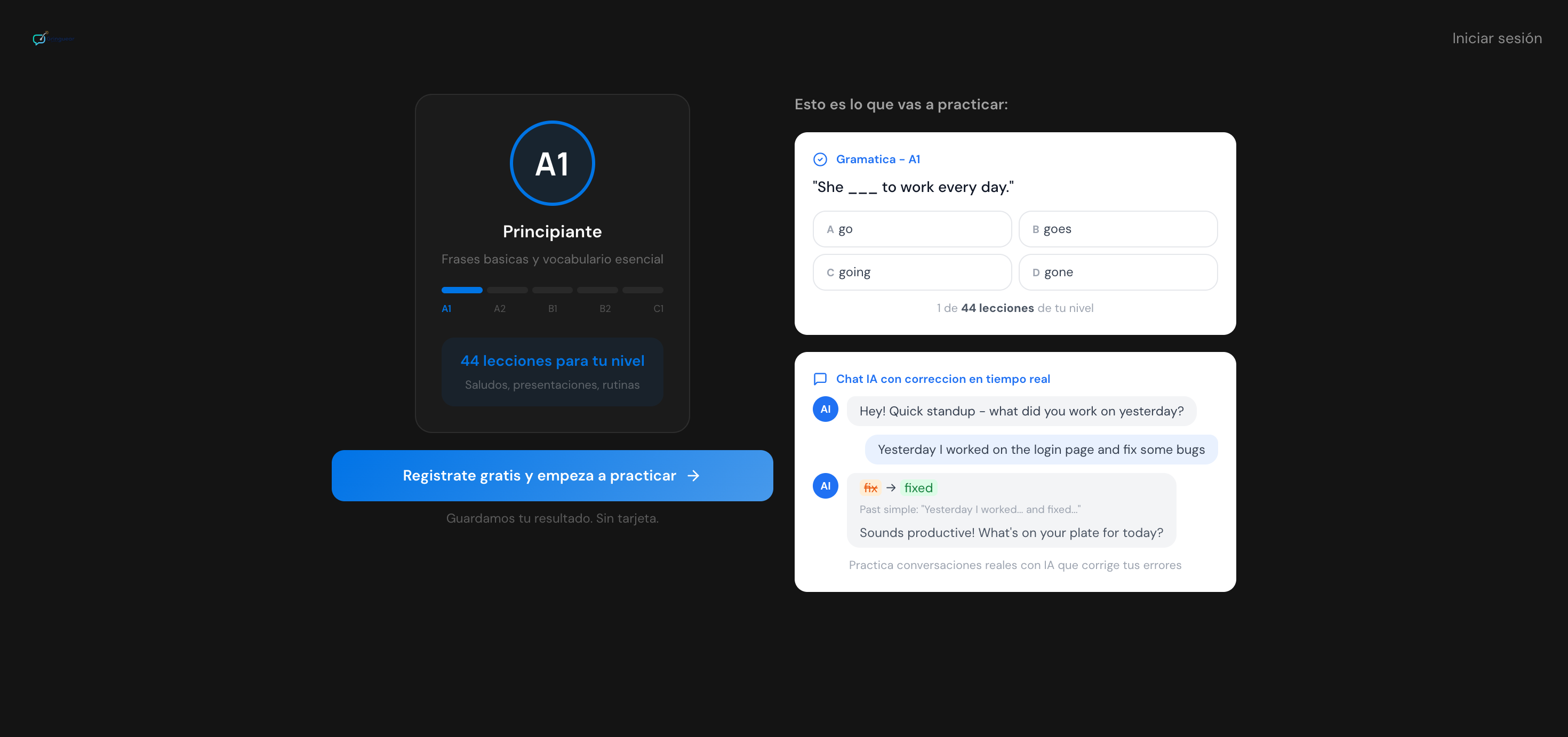
Descubrí tu nivel de inglés en 30 segundos
Diagnostico gratuito con resultado CEFR inmediato. Despues, practica con lecciones y chat con IA adaptados a tu nivel.
Hacer el diagnostico gratis