Conectores en ingles: como sonar profesional y organizado
However, therefore, moreover: los conectores que diferencian un ingles basico de uno profesional. Lista completa con ejemplos laborales por nivel CEFR.
Hay una diferencia notable entre alguien que escribe "The project was delayed. We missed the deadline. The client is unhappy." y alguien que escribe "The project was delayed; consequently, we missed the deadline, which has understandably frustrated the client."
Ambas transmiten la misma informacion. Pero la segunda suena como un profesional. La diferencia son los conectores - las palabras y frases que unen ideas, muestran relaciones logicas y le dan fluidez a tu ingles escrito y oral.
En este articulo vas a encontrar una lista completa de conectores agrupados por funcion, con ejemplos en contextos laborales reales, y marcados por nivel CEFR para que sepas cuales incorporar primero segun donde estes.
Por que los conectores importan tanto
En el trabajo, usas el ingles escrito todo el tiempo: emails, Slack, documentos de especificaciones, pull request descriptions, informes. Cuando no usas conectores, tu escritura suena fragmented y basica. Cuando los usas bien, suenas organizado, logico y confiable.
Los conectores tambien importan en el ingles oral: presentaciones, reuniones, entrevistas. La persona que dice "First, we identified the problem. Then, we analyzed the root cause. As a result, we implemented a fix that reduced errors by 60%." suena mucho mas convincente que alguien que enumera hechos sin estructura.
Vamos a los grupos.
1. Contraste - cuando algo sorprende o contradice
Estos conectores muestran que dos ideas estan en tension.
However (sin embargo) - nivel B1 El mas comun y seguro. Cierra una idea y abre la contraria.
"The initial estimate was three weeks. However, after the technical review, we realized it would take five."
Uso en email: ideal para dar malas noticias con tacto.
Although / Even though (aunque) - nivel B1 Van al inicio de la clausula subordinada.
"Although the deadline was tight, the team delivered everything on time." "Even though the budget was cut, we managed to ship the core features."
Despite / In spite of (a pesar de) - nivel B2 Mas formal. Van seguidos de un sustantivo o gerundio, no de una oracion completa.
"Despite the technical challenges, the migration was completed successfully." "In spite of having limited resources, the team exceeded expectations."
Nevertheless / Nonetheless (sin embargo, aun asi) - nivel B2 Mas formal que however. Usados en documentos, reportes o comunicaciones ejecutivas.
"The feature was not originally in scope. Nevertheless, the team found a way to include it without impacting the timeline."
On the other hand (por otro lado) - nivel B1 Perfecto para comparar dos opciones o perspectivas.
"The first approach is faster to implement. On the other hand, it creates more technical debt in the long run."
While (mientras que, aunque) - nivel B1-B2 Se puede usar para contraste simultaneo.
"While the frontend team finished early, the backend API was still being tested."
2. Causa y efecto - para mostrar por que pasa algo
Estos conectores son esenciales en reportes, post-mortems y cualquier comunicacion donde explicás consecuencias.
Therefore (por lo tanto) - nivel B1 El mas versatil. Indica consecuencia logica.
"The API rate limit was reached. Therefore, all requests after 2 PM failed."
As a result / As a consequence (como resultado, como consecuencia) - nivel B1-B2 Mas explesivos que therefore. Funcionan especialmente bien para describir impactos.
"The server went down during peak hours. As a result, we lost approximately 3,000 transactions."
Consequently (en consecuencia) - nivel B2 Version mas formal de as a result. Muy comun en documentos tecnicos y reportes.
"The dependency was not updated. Consequently, the build failed in production."
Because of / Due to (debido a) - nivel A2-B1 Van seguidos de un sustantivo o frase nominal.
"The meeting was postponed due to a scheduling conflict." "Because of the new compliance requirements, we need to update our data handling process."
Since / Because (porque, ya que) - nivel A2 Van seguidos de una oracion completa.
"Since the client hasn't responded yet, we'll proceed with the default configuration." "We escalated the issue because the team couldn't resolve it within the SLA."
This led to / This resulted in (esto llevo a, esto resulto en) - nivel B2 Muy utiles en narrativas de incidentes o casos de estudio.
"The lack of monitoring led to a three-hour outage that went undetected."
3. Adicion - para sumar ideas
Usas estos cuando queres agregar informacion sin crear contraste.
In addition / Additionally / Furthermore (ademas) - nivel B1-B2 Furthermore es el mas formal de los tres.
"The new feature reduces load time. Additionally, it improves the user experience on mobile." "The report covers Q1 performance. Furthermore, it includes projections for Q2 based on current trends."
Moreover (ademas, es mas) - nivel B2 Implica que lo que sigue es aun mas importante o relevante que lo anterior.
"The solution is cost-effective. Moreover, it scales without any additional infrastructure."
As well as / Along with (ademas de, junto con) - nivel B1 Van dentro de la misma oracion, no al inicio.
"We need to review the API documentation as well as the database schema." "Along with the technical report, please share the cost breakdown."
Not only... but also (no solo... sino tambien) - nivel B2 Estructura enfatica muy comun en presentaciones.
"The new process not only saves time but also reduces errors significantly."
4. Conclusion y resumen - para cerrar ideas
In conclusion / To conclude (en conclusion) - nivel B1 Para el final de un reporte, email largo o presentacion.
"In conclusion, the pilot program delivered positive results and we recommend scaling it to all regions."
To summarize / In summary (para resumir) - nivel B1 Para compactar lo dicho antes de pasar al siguiente punto.
"To summarize: we identified three bottlenecks, proposed solutions for each, and have already started implementing the first fix."
Overall (en general, en terminos generales) - nivel B1 Muy util en retrospectivas y reportes.
"Overall, the sprint went well despite the mid-week incident."
All in all (en definitiva) - nivel B2 Version mas informal y conversacional de overall.
"All in all, it was a successful launch. A few bugs made it to production, but nothing critical."
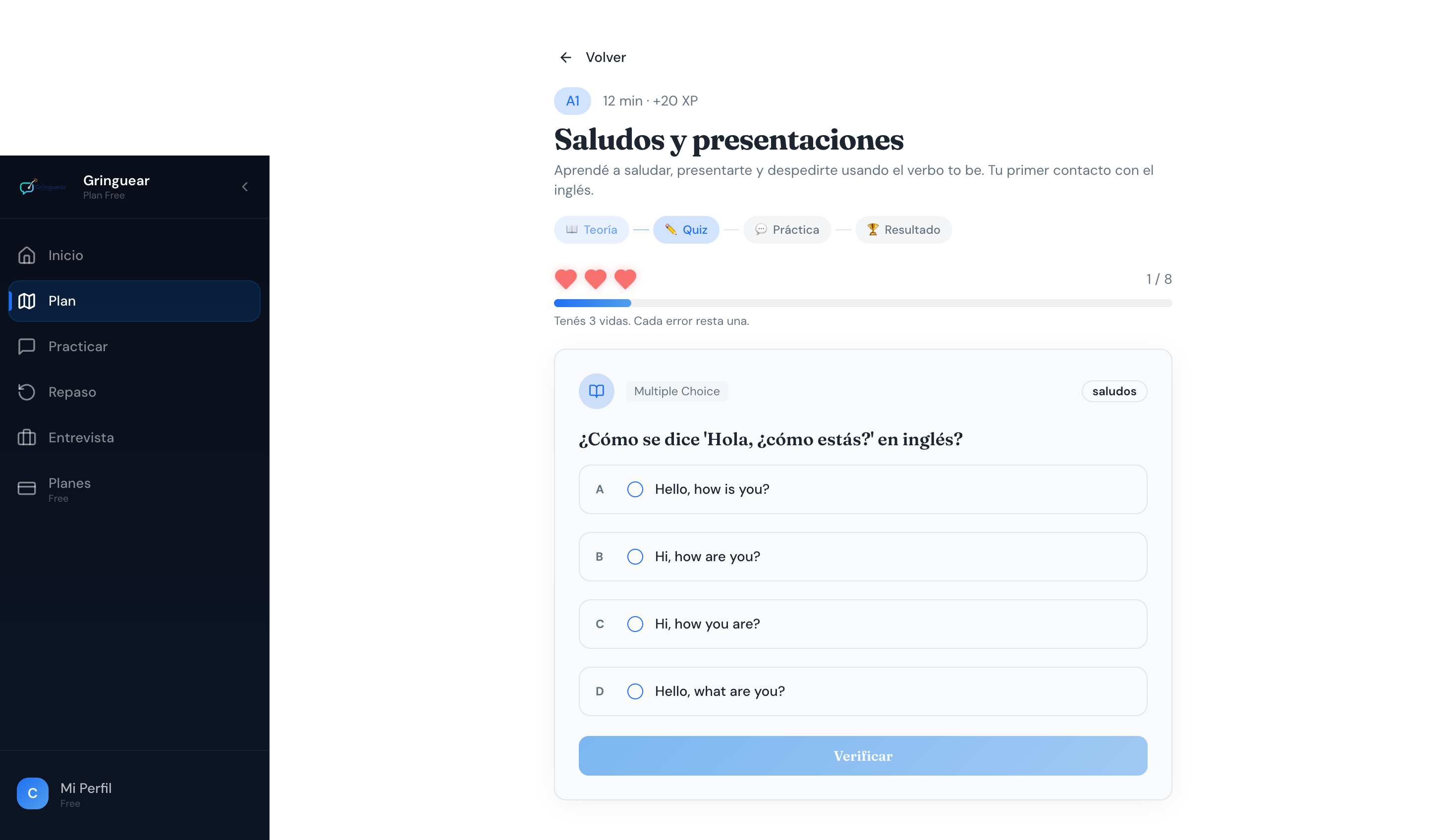
Aprende con lecciones interactivas
183 lecciones de A1 a B2 con ejercicios practicos, feedback inmediato y vocabulario laboral real.
Ver las lecciones5. Secuencia - para estructurar pasos o cronologias
First / Firstly, Second / Secondly, Finally - nivel A2-B1
"First, we'll review the current architecture. Second, we'll identify the pain points. Finally, we'll propose a migration plan."
Then / Next / After that - nivel A2
"Clone the repository. Then, install the dependencies. After that, run the setup script."
Previously / Prior to (anteriormente, antes de) - nivel B1-B2
"Previously, deployments took four hours manually. Now they run in 12 minutes with the new pipeline." "Prior to the redesign, the onboarding completion rate was 43%."
Subsequently / Following this (a continuacion, tras esto) - nivel B2
"The service was restarted. Subsequently, all metrics returned to normal levels."
6. Enfasis - para destacar lo mas importante
In particular / Particularly (en particular, particularmente) - nivel B1
"The performance improvements were significant, particularly on mobile devices."
Especially (especialmente) - nivel A2-B1
"This approach works well for large datasets, especially when memory is constrained."
Above all (sobre todo) - nivel B1-B2
"Above all, we need to make sure the data migration is reversible."
It is worth noting that (vale la pena destacar que) - nivel B2
"It is worth noting that this solution requires no changes to the existing database schema."
Antes y despues: como los conectores transforman un email
Este es uno de los mejores ejercicios para ver el impacto real de los conectores. Compara estos dos emails:
Antes (sin conectores):
"Hi Sarah,
The backend is ready. The frontend still has bugs. We can't deploy this week. The QA team needs more time. I'll update you on Monday."
Despues (con conectores):
"Hi Sarah,
The backend is ready. However, the frontend still has a few unresolved bugs. As a result, we won't be able to deploy this week. The QA team needs additional time to complete their review. I'll have a full update for you by Monday."
El segundo email transmite exactamente lo mismo pero suena profesional, considerado y organizado. No cambio el contenido - solo agrego las relaciones logicas entre las ideas.
Un segundo ejemplo: antes y despues en un standup escrito
Antes:
"Yesterday I worked on the payment module. There were issues with the webhook validation. I fixed the timeout error. Today I'll work on tests."
Despues:
"Yesterday I worked on the payment module. Although most of it went smoothly, we ran into issues with the webhook validation. I tracked it down to a timeout error, which I fixed by end of day. Today I'll focus on writing tests to make sure it doesn't regress."
Como incorporarlos sin sonar forzado
El error comun al aprender conectores es usarlos en exceso o fuera de contexto. Algunas reglas practicas:
-
Empeza con los de tu nivel. Si estas en A2-B1, domina however, because, therefore, also, first/then/finally antes de intentar notwithstanding o insofar as.
-
Un conector nuevo por semana. Elegi uno, buscalo en tu proxima comunicacion laboral y usalo deliberadamente.
-
Lee en ingles con atencion a conectores. Cuando leas un email, reporte o articulo tecnico, marca los conectores que usaron y analiza por que.
-
No traduzcas literalmente. "Although" no siempre equivale a "aunque" en contexto. Aprende como nativos los usan, no solo el significado del diccionario.
Por nivel CEFR: por donde empezar
A1-A2: and, but, so, because, first, then, also, for example
B1: however, although, therefore, as a result, in addition, for instance, while, nevertheless
B2: consequently, furthermore, moreover, despite, in spite of, not only... but also, subsequently
C1-C2: notwithstanding, inasmuch as, whereby, in as much as - y sobre todo, el uso fluido de todos los anteriores en contexto.
¿Queres saber en que nivel estas y que conectores deberian ser tu prioridad ahora? El diagnostico de Gringuear te ubica en el CEFR en 5 minutos y te da un plan personalizado segun tu nivel real. Hace tu diagnostico gratis.
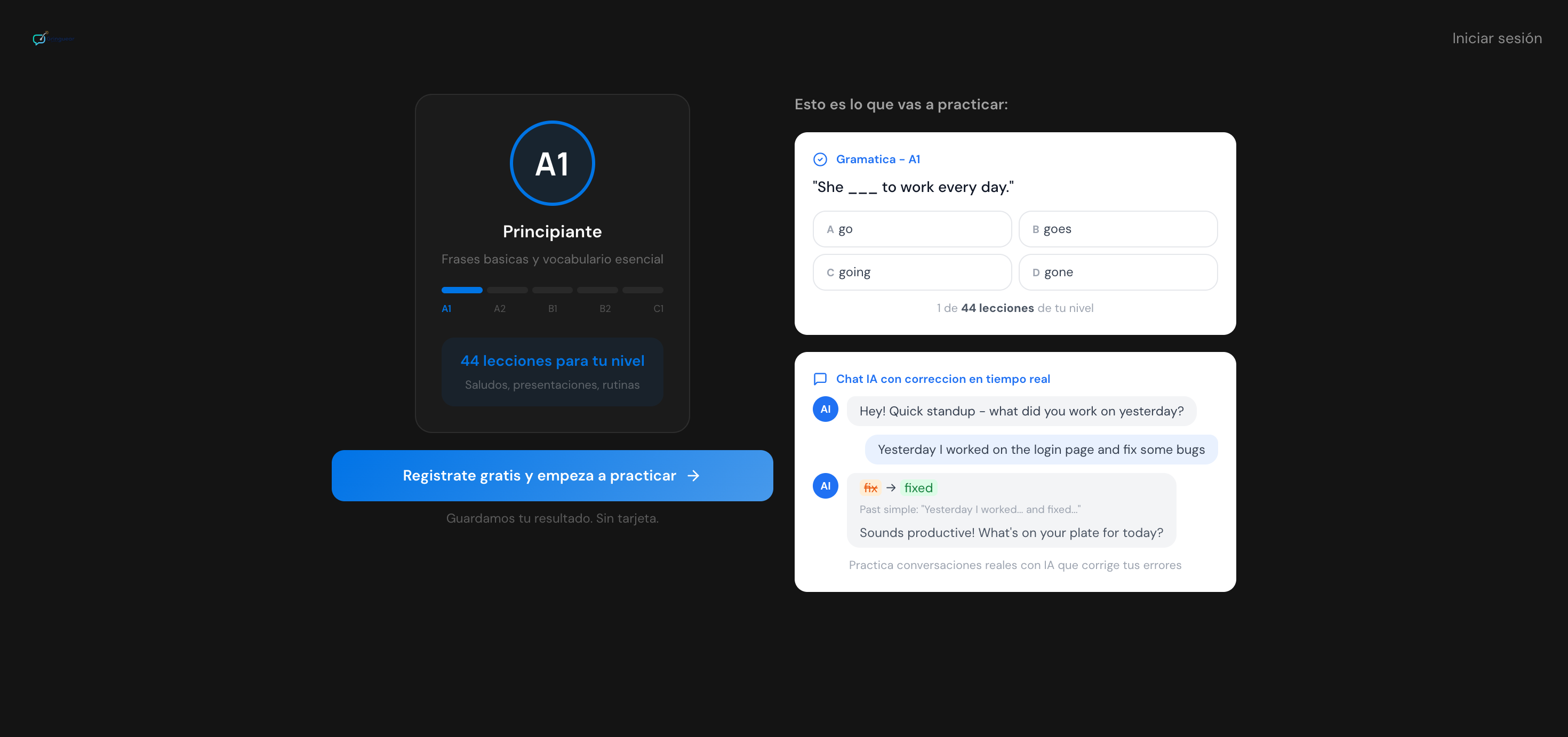
Descubrí tu nivel de inglés en 30 segundos
Diagnostico gratuito con resultado CEFR inmediato. Despues, practica con lecciones y chat con IA adaptados a tu nivel.
Hacer el diagnostico gratis