Used to en ingles: hablar de habitos del pasado
Como usar used to, be used to y get used to en ingles. Con diferencias claras, ejemplos practicos y ejercicios para no confundirlos.
Used to: tres frases que se escriben igual pero significan cosas muy distintas
Si alguna vez viste "used to", "be used to" y "get used to" y te preguntaste por que suenan tan parecidas pero no significan lo mismo, no sos el unico. Es uno de los puntos de gramatica inglesa que mas confusion genera.
La buena noticia es que tienen usos muy distintos y con los ejemplos correctos se entienden bien.
1. Used to + infinitivo: habitos y estados del pasado
Esta estructura habla de habitos, rutinas o estados que eran ciertos en el pasado pero ya no lo son.
Estructura: sujeto + used to + infinitivo (forma base)
I used to work in an office. Now I work from home. She used to commute two hours every day. We used to have weekly meetings, but now we do them monthly. He didn't use to speak English. Now he's fluent.
El mensaje implicito es siempre: esto era asi antes, pero ya no lo es. Si el habito sigue igual, no usas used to, sino el presente simple.
Forma negativa
I didn't use to like public speaking. (antes no me gustaba, ahora si) She didn't use to work remotely. (antes no trabajaba remoto)
Nota importante: en la forma negativa, el verbo vuelve a su forma base: didn't use to (sin -d al final de use).
Forma interrogativa
Did you use to work in finance? Did she use to manage a team?
Misma logica: con el auxiliar did, el verbo va sin la -d.
Diferencia con el pasado simple
I worked in an office for two years. = pasado simple, hecho del pasado I used to work in an office. = habito pasado que contrasta con el presente
El pasado simple puede referirse a una sola vez. Used to implica repeticion o estado prolongado.
I visited New York in 2019. = fui una vez I used to visit New York every year. = lo hacia regularmente (ya no)
2. Be used to + -ing / sustantivo: estar acostumbrado a
Esta estructura expresa estar acostumbrado a algo. El sujeto ya se adapto a una situacion.
Estructura: sujeto + am/is/are/was/were + used to + sustantivo o verbo-ing
I am used to working late. = estoy acostumbrado a trabajar hasta tarde (ya lo acepto) She is used to managing large teams. = esta acostumbrada a manejar equipos grandes We were used to the old system. = estabamos acostumbrados al sistema viejo He is not used to remote work yet. = todavia no esta acostumbrado al trabajo remoto
Notas importantes:
- El verbo "be" cambia segun el tiempo: am/is/are (presente), was/were (pasado)
- Lo que sigue a used to es un sustantivo o un verbo en -ing, nunca un infinitivo
Incorrecto: I am used to work late. Correcto: I am used to working late.
3. Get used to + -ing / sustantivo: acostumbrarse a (proceso)
Esta estructura expresa el proceso de adaptarse a algo, convertirse en alguien que esta acostumbrado.
Estructura: sujeto + get/got/getting + used to + sustantivo o verbo-ing
I'm getting used to the new software. = me estoy acostumbrando al software nuevo She got used to presenting in English. = se acostumbro a presentar en ingles It takes time to get used to a new work culture. = lleva tiempo acostumbrarse I'll get used to it eventually. = eventualmente me voy a acostumbrar
La diferencia con be used to es el proceso vs el estado:
I am used to the noise. = ya estoy acostumbrado (estado final) I am getting used to the noise. = me estoy acostumbrando (proceso en curso) I got used to the noise. = me acostumbre (proceso completado en el pasado)
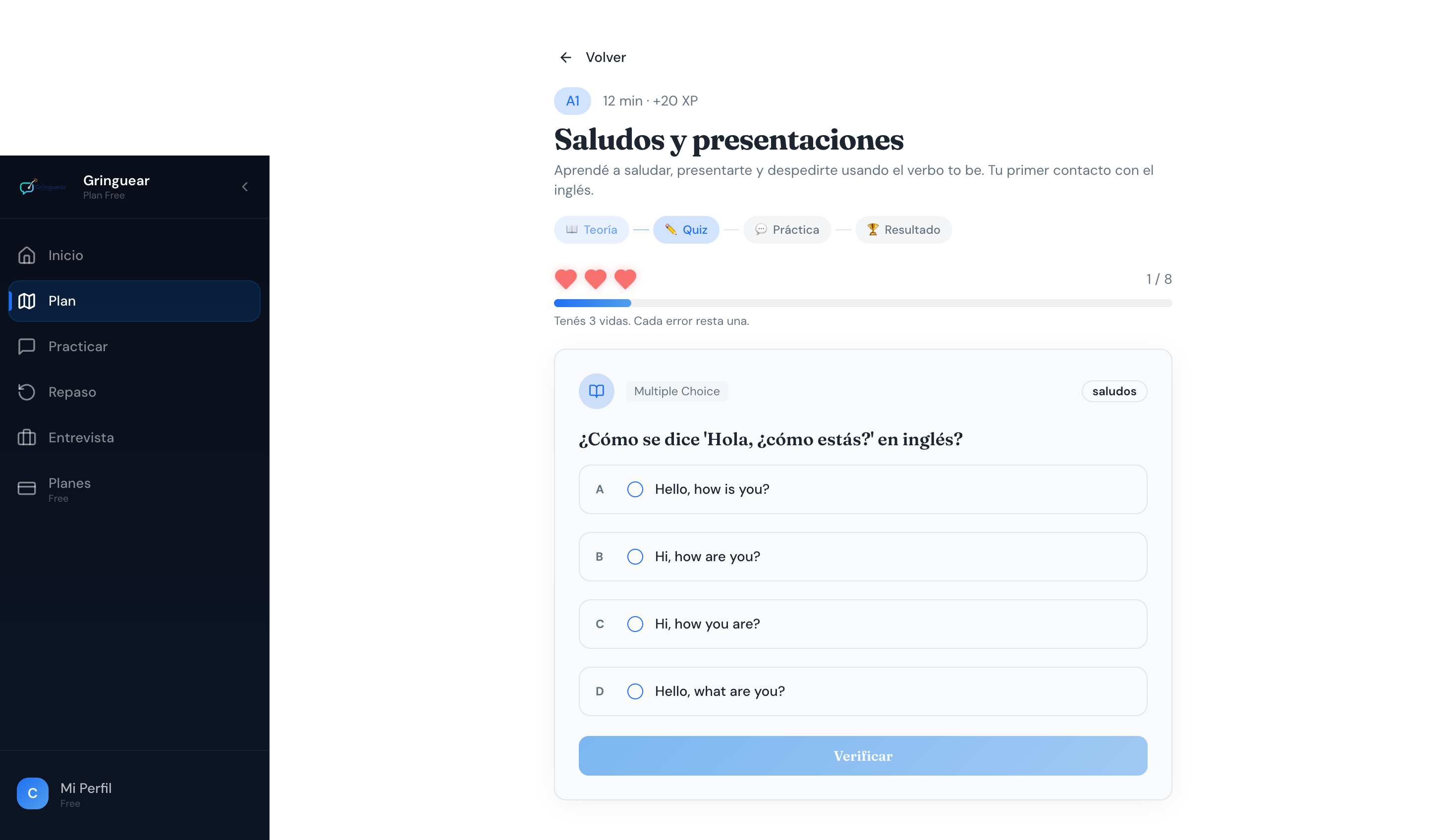
Practica gramatica en contexto
Ejercicios interactivos que te muestran la gramatica en situaciones reales de trabajo, no en frases artificiales.
Ver las leccionesTabla comparativa de las tres estructuras
| Estructura | Significado | Tiempo del verbo be/get | Ejemplo |
|---|---|---|---|
| used to + infinitivo | habito/estado pasado que ya no existe | No aplica (used to es fijo) | I used to travel a lot. |
| be used to + -ing | estar acostumbrado (estado) | Cambia: am/is/are/was/were | I am used to traveling. |
| get used to + -ing | acostumbrarse (proceso) | Cambia: get/got/getting | I am getting used to traveling. |
Errores comunes de hispanohablantes
Error 1: Confundir las tres estructuras
Used to + infinitivo es para el pasado: I used to travel. Be/Get used to + -ing es para hablar de adaptacion (en cualquier tiempo): I am used to traveling.
Incorrecto: I used to working late. (esta mezclando la primera con la segunda) Correcto: I used to work late. (primera estructura) O I am used to working late. (segunda)
Error 2: Usar infinitivo despues de "be/get used to"
Incorrecto: She is used to work in teams. Correcto: She is used to working in teams.
Siempre -ing o sustantivo despues de be/get used to.
Error 3: Olvidar cambiar "use" a "used" en afirmaciones
Incorrecto: I use to go to the office. Correcto: I used to go to the office.
En afirmaciones, siempre va used to (con -d). Solo en negativos e interrogativos con did va sin -d.
Error 4: Pronunciar "used to" como si fueran dos palabras separadas
En el habla natural, used to suena como "yoosto" (la d final de "used" se mezcla con la t de "to"). Esta pronunciacion fusionada es normal y esperada.
Ejercicios practicos
Completa con used to + infinitivo, be used to + -ing o get used to + -ing segun corresponda:
- When I first started working remotely, it was hard. But now I _______ (work) alone. (estado: ya estoy acostumbrado)
- She _______ (commute) three hours a day, but she moved closer to the office.
- It took me a few weeks, but I finally _______ (use) the new project management system. (proceso completado)
- He _______ (not / give) presentations in English, but now he does it regularly.
- The new team members are still _______ (follow) our processes. (proceso en curso)
Respuestas:
- am used to working
- used to commute
- got used to using
- didn't use to give
- getting used to following
En el contexto laboral
En entrevistas laborales:
"I used to work in a very structured corporate environment, but I've adapted well to startup culture." "I am used to working with tight deadlines and shifting priorities." "It took some time to get used to remote work, but I found my rhythm quickly."
En onboarding y adaptacion a un nuevo trabajo:
"I'm still getting used to the team's communication style." "She used to manage a smaller team, so leading twenty people was a big adjustment at first."
En conversaciones sobre cambios de carrera:
"I used to be in finance, but I transitioned to product management five years ago." "The technical side was new to me, but I got used to it faster than I expected."
Practica con Gringuear
Estas estructuras aparecen en las lecciones de nivel B1 de Gringuear, especialmente en ejercicios de narracion de experiencias laborales y descripcion de cambios de carrera.
Hace el diagnostico gratuito para saber si ya estas en ese nivel. Y para practicarlo en contexto, usa el chat de practica con IA y contanos sobre tu trayectoria laboral en ingles.
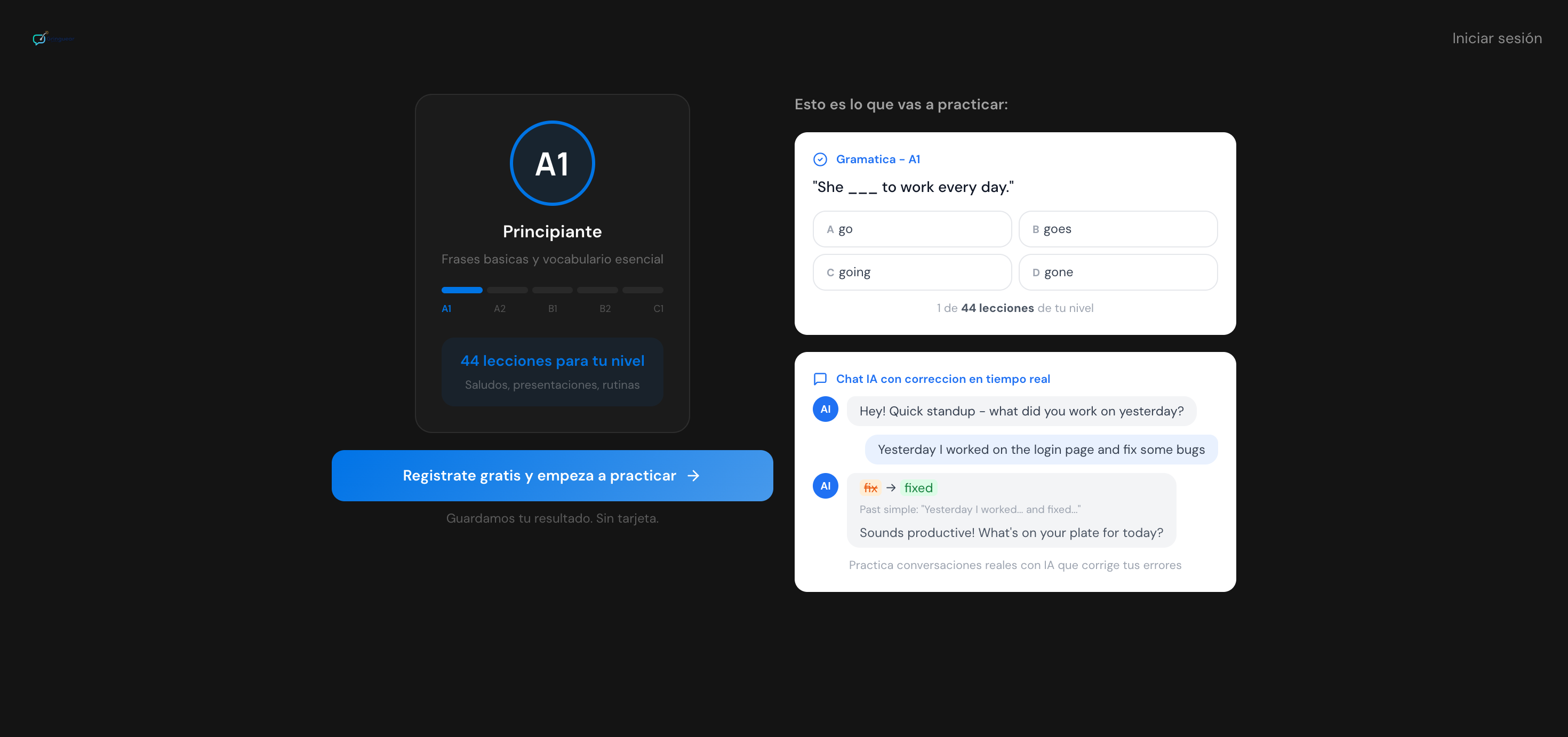
Descubrí tu nivel de inglés en 30 segundos
Diagnostico gratuito con resultado CEFR inmediato. Despues, practica con lecciones y chat con IA adaptados a tu nivel.
Hacer el diagnostico gratisPresent perfect vs past simple: cuando usar cada uno
9 min de lectura