Ingles para standups y daily meetings: frases que necesitas hoy
Templates listos para tu daily en ingles. Frases para reportar progreso, bloqueantes y planes. Funciona para Scrum, Kanban y equipos async.
El standup diario es probablemente el momento mas repetido de tu semana laboral.
Si trabajas en un equipo internacional, lo haces en ingles todos los dias. Son 2-3 minutos de hablar (o escribir) en ingles frente a todo el equipo. Y aunque parece simple, hay una presion especifica en ese momento: decir lo correcto, de forma clara, rapido, sin trabar el ritmo de la reunion.
Esta guia te da exactamente lo que necesitas: templates probados, frases organizadas por situacion y variaciones por nivel de ingles. Podes copiar estos templates hoy mismo y usarlos en tu proximo standup.
El formato clasico y por que no siempre aplica
El standup Scrum clasico tiene tres preguntas:
- What did you do yesterday?
- What are you working on today?
- Any blockers?
Es el formato que vas a encontrar en la mayoria de los equipos de producto y desarrollo. Pero en la practica hay variaciones:
- Equipos async (Slack standup): se escribe en un canal, a veces con un bot que manda el prompt automaticamente
- Standups de OKR: foco en progreso hacia objetivos del trimestre, no en tareas diarias
- Standups de incidente: foco en el estado del incidente y ETA de resolucion
- Standups de lanzamiento: foco en el checklist de deploy y coordinacion entre equipos
Los templates de este articulo cubren principalmente el formato clasico, que es el mas comun. Para standups tecnicos especializados, las frases de base siguen siendo las mismas.
Templates completos por nivel
Nivel A2-B1: Templates basicos funcionales
Estos templates son directos, claros y correctos. No son los mas sofisticados, pero comunican todo lo necesario.
Dia normal con progreso:
Yesterday I worked on [tarea]. Today I'm going to continue with [tarea] and [tarea]. No blockers.
Dia normal con bloqueante:
Yesterday I finished [tarea]. Today I'm working on [tarea]. I'm blocked on [descripcion breve] - I need [lo que necesitas] to continue.
Dia de reunion o coordinacion:
Yesterday I had a sync with [nombre/equipo] and we aligned on [tema]. Today I'm going to [tarea]. No blockers.
Dia de PR o code review:
Yesterday I submitted a PR for [feature/fix]. Today I'm waiting for reviews and working on [tarea secundaria]. Let me know if you can take a look at the PR.
Dia de inicio de tarea nueva:
Yesterday I wrapped up [tarea]. Today I'm starting [nueva tarea] - I'll spend some time understanding the requirements before coding. No blockers.
Nivel B1-B2: Templates con mas contexto y fluidez
Estos templates agregan contexto, porcentajes y estimaciones que hacen tu comunicacion mas util para el equipo.
Con estimacion de tiempo:
Yesterday I made good progress on [tarea] - about 70% done. Today I'm going to finish that and hopefully get a PR out by EOD. No blockers.
Con contexto del bloqueante:
Yesterday I started working on [tarea] but I hit a blocker - the staging environment isn't reflecting the latest changes and I'm getting inconsistent results. Today I'm going to dig into that with [nombre o equipo de infra]. If you're familiar with this issue, would love a quick sync.
Con plan contingente:
Yesterday I worked on [tarea]. Today I'm going to push to finish it, but if I hit the same issue with [problema], I might need to deprioritize and jump to [tarea alternativa] instead. Will keep the team posted.
Con coordinacion entre personas:
Yesterday I finished the backend endpoint. Today I'm going to write unit tests and coordinate with [nombre] on the frontend integration - we want to get that moving in parallel. No blockers on my end.
Nivel B2+: Templates naturales con registro profesional
Este nivel permite variaciones en el orden, agregar opinion sobre el trabajo y comunicarse de forma mas conversacional sin perder precision.
Con reflexion sobre progreso:
Quick update: yesterday was mostly heads-down on [tarea], and I'm closer than I expected - should be able to wrap it up today or tomorrow. The main thing I'm thinking about is [consideracion tecnica]. No blockers, but I'll flag if anything comes up.
Con reconocimiento a otro:
Yesterday [nombre] helped me unblock the authentication issue - really appreciate that. Because of that, I made significant progress on [tarea] and today I'm going to push to finish it. No blockers.
Con pregunta al equipo:
Yesterday I finished [tarea] and started looking into [nueva tarea]. Quick question for the team: has anyone worked with [tecnologia/sistema] before? Would love a 10-minute chat if someone has context. Otherwise, today I'll just dive in. No other blockers.
Frases especificas por situacion
Reportar progreso
Trabajo completado:
- "I wrapped up [tarea] yesterday."
- "Finished and pushed [tarea]."
- "Got [tarea] done - it's ready for review."
- "Closed out [ticket numero] yesterday."
Progreso parcial:
- "Made good progress on [tarea] - about halfway through."
- "Still working on [tarea] - it's taking longer than expected because [razon breve]."
- "I'm further along than I expected - should finish today."
- "Slower than planned because of [razon] - might need one more day."
Reportar bloqueantes
Bloqueante por dependencia de otra persona:
- "I'm blocked waiting for [nombre] to review [cosa]."
- "I need the API credentials from [equipo] before I can continue."
- "Waiting on a decision from [nombre] on [tema] - can't move forward without that."
Bloqueante tecnico:
- "I'm hitting an issue with [descripcion tecnica] - still investigating."
- "The [servicio/herramienta] in staging is behaving unexpectedly. I'll dig into it today."
- "I'm not sure about the right approach here - could use some input."
Bloqueante de claridad o prioridad:
- "I need some clarification on the acceptance criteria before I start coding."
- "Not sure if [tarea A] or [tarea B] should be the priority today - can we align quickly?"
- "I have conflicting information from two tickets - want to make sure I build the right thing."
Cuando no hay novedades relevantes
Algunos dias no tenes mucho que reportar. Esta bien decirlo de forma directa:
- "Pretty quiet day yesterday - mostly in meetings. Today I'm heads-down on [tarea]."
- "No major updates - continuing with what I had yesterday. No blockers."
- "Yesterday was a planning day. Today I'm back to [tarea]."
Cuando sos nuevo en el equipo
Las primeras semanas en un equipo nuevo tienen su propio vocabulario:
- "Still onboarding - spent yesterday going through [documentacion/codebase]. Today I'm going to set up my local environment and hopefully start on a first small task."
- "I paired with [nombre] yesterday to understand the architecture better. Today I'll take a first stab at [tarea] and will probably have questions - feel free to flag me in Slack."
- "Getting up to speed on [area]. No blockers yet, but I'll flag if I get stuck."
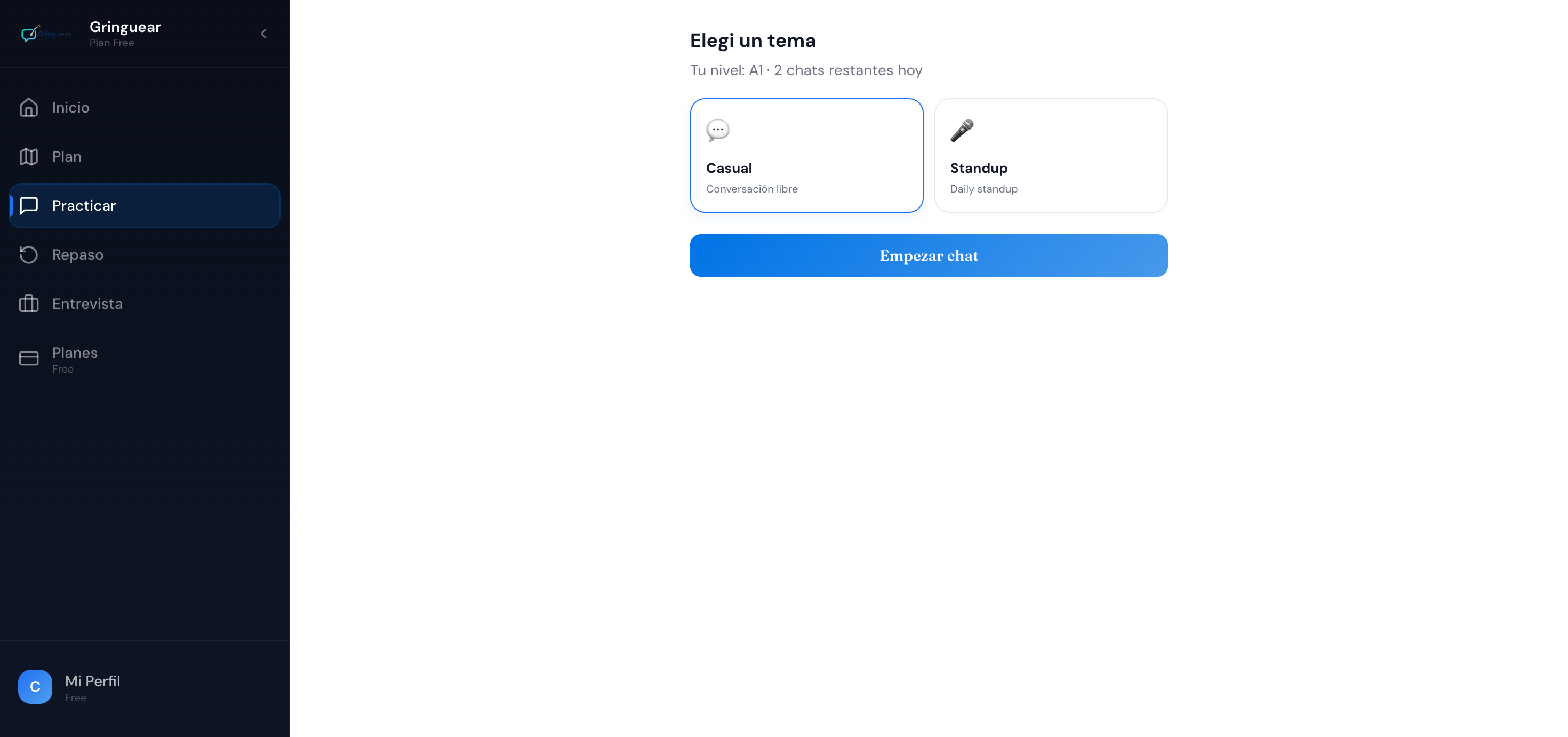
Practica ingles laboral con IA
Chat con IA que corrige tus errores en contextos reales: standups, emails, Slack y reuniones.
Probar el chat con IAStandup escrito en Slack
El standup async en Slack tiene sus propias convenciones. La mayoria de los equipos usan un bot (Geekbot, Range, o un recordatorio manual) que manda el prompt al canal.
Formato comun:
:green_circle: Standup - [fecha]
Yesterday: [una o dos oraciones]
Today: [una o dos oraciones]
Blockers: [None / descripcion]
Formato minimalista:
- Done: [tarea]
- Doing: [tarea]
- Blocked: [None / descripcion]
Formato narrativo (equipos mas informales):
Finished the billing module refactor yesterday. Today I'm picking up the email notifications feature - should be able to get a first draft out. No blockers.
Errores comunes en standups
Demasiado detalle tecnico
El standup no es el lugar para explicar en detalle por que algo es complicado o como lo resolviste. Eso va en la reunion de follow-up o en el canal tecnico del equipo.
Malo: "Yesterday I was working on the authentication module and I found out that the JWT token wasn't being validated correctly because there was a mismatch between the signing algorithm in the frontend and the expected algorithm in the backend which caused an inconsistency in the..."
Bueno: "Yesterday I fixed a JWT validation bug in the auth module. PR is up. Today I'm moving on to the payment flow."
Demasiado vago
El extremo opuesto tambien es un problema.
Malo: "Yesterday I worked on stuff. Today more of the same."
Bueno: "Yesterday I continued with the onboarding flow. Today I'll finish the step 3 UI and write tests."
No mencionar blockers reales
Muchos profesionales evitan mencionar blockers por miedo a parecer incompetentes. Es el error opuesto al que deberian tener: el equipo no puede ayudarte si no sabe que estas bloqueado.
Si estas bloqueado, decilo. Es literalmente para eso que existe el standup.
Frases que suenan raras en ingles
Algunas traducciones literales del espanol quedan mal en ingles:
- "I will do" en vez de "I'll work on" o "I'll take care of"
- "I have a doubt" en vez de "I have a question"
- "I work in" (para referirse a un proyecto) en vez de "I'm working on"
- "I am agree" en vez de "I agree"
Por nivel: en que enfocarse
A2-B1: Aprende los tres templates basicos de memoria. Practica decirlos en voz alta antes del standup. El objetivo es no tener que pensar en la estructura mientras hablas.
B1-B2: Agrega estimaciones y contexto. Practica decir numeros en ingles (porcentajes, fechas, tiempos) con fluidez. Empieza a usar conectores: "because", "so", "which means".
B2+: El objetivo es sonar natural, no correcto. Practica standups conversacionales, agrega opinion o contexto cuando es relevante y empieza a usar phrasal verbs comunes: "wrap up", "pick up", "dig into", "flag", "loop in".
Los standups son practica diaria. Si los haces en ingles todos los dias, en 30 dias vas a notar una diferencia real en tu fluidez y confianza.
Si queres acelerar ese proceso, descubri tu nivel de ingles gratis y practica con ejercicios adaptados exactamente a donde estas parado.
Guia completa
Ingles para programadores
Guia completa de ingles para developers que trabajan en equipos internacionales.
Ver la guia completa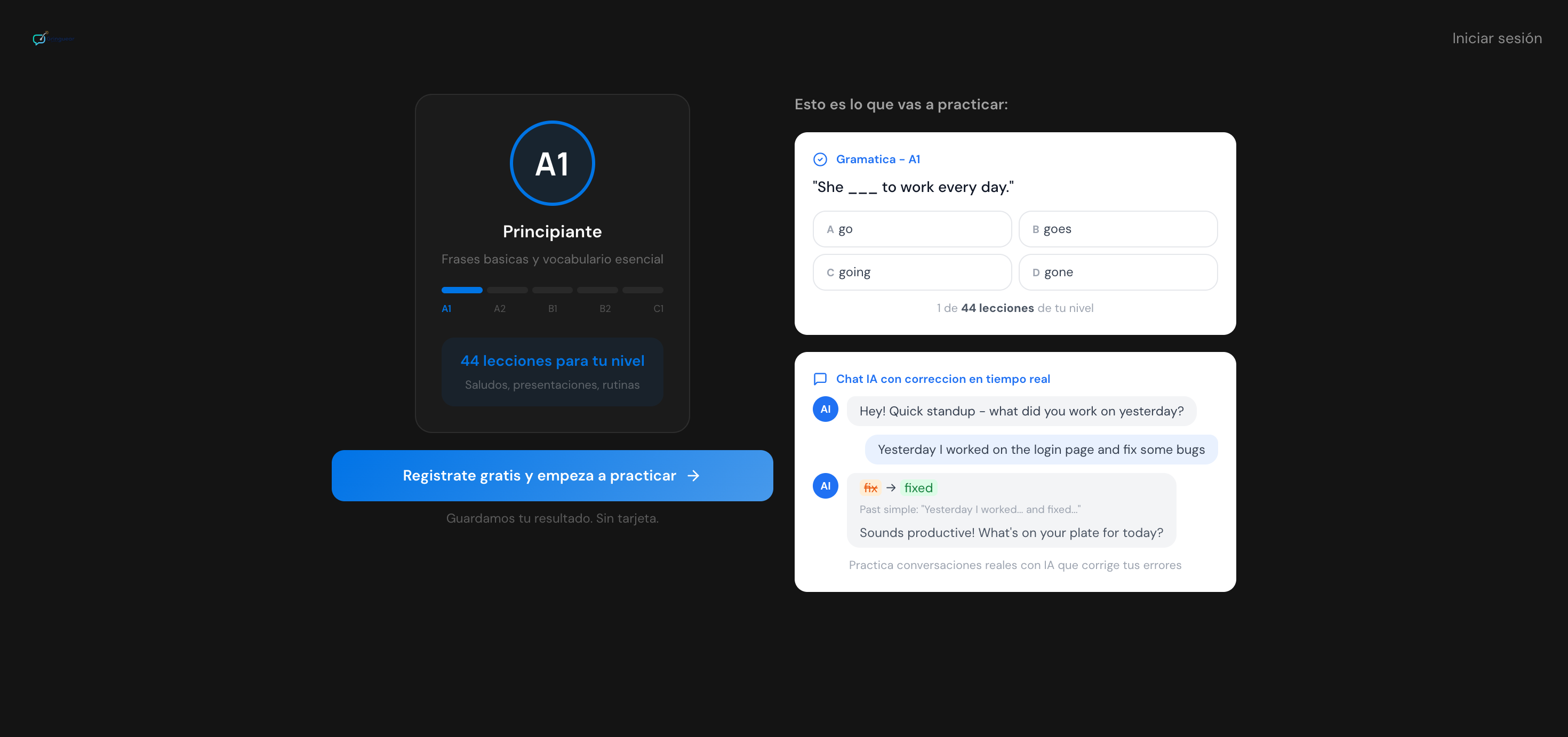
Descubrí tu nivel de inglés en 30 segundos
Diagnostico gratuito con resultado CEFR inmediato. Despues, practica con lecciones y chat con IA adaptados a tu nivel.
Hacer el diagnostico gratis